
I was thinking about…
Gen X’s Fear of Selling Out: Why Authenticity Became the Holy Grail
by Andy Lee
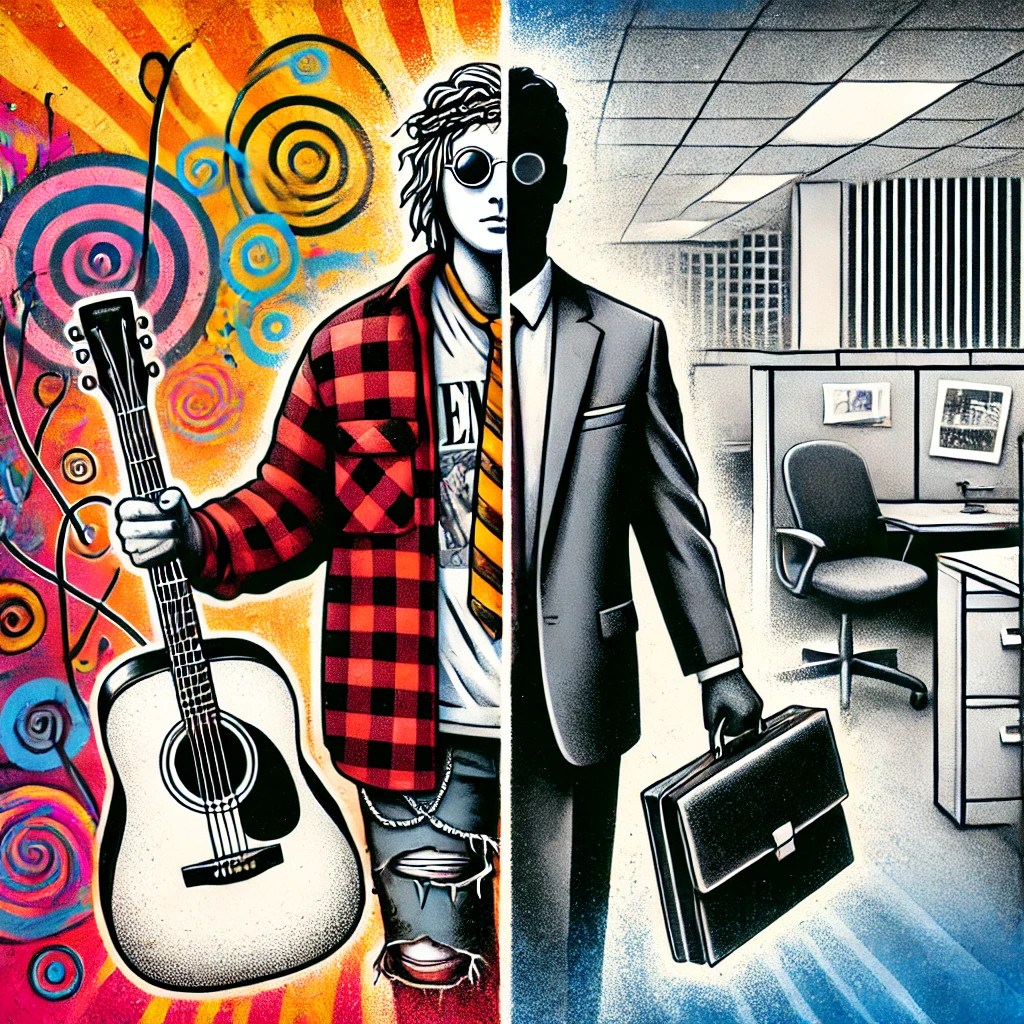
I was thinking about… why Gen X has such an aversion to “selling out.” I mean, let’s face it: no generation has held onto the torch of authenticity like we have. From the indie music scene to the corporate grind, we’ve always been skeptical of anything that felt too shiny, too pre-packaged, too… fake. But why? Why did we, of all the generations, become obsessed with keeping it real?
Growing up in the ‘70s and ‘80s, we watched a lot of ideals crash and burn. We saw political scandals unfold on TV, companies downsizing without warning, and celebrities we admired hawking soda and sneakers. It left a bad taste in our mouths. For us, watching someone “sell out” was like witnessing the death of something pure. And if there’s one thing we value more than anything, it’s purity in what we create, what we stand for, and how we show up in the world.
Back in the day, you weren’t cool unless you were sticking it to the man. Bands that went mainstream? Sellouts. Employees who climbed the corporate ladder too eagerly? Sellouts. Even watching your favorite indie movie actor take on a big-budget Hollywood role felt like a betrayal. We craved the grit, the rawness, the refusal to conform to mass appeal. To Gen X, mainstream success always came with an asterisk: “Did you have to trade a piece of your soul to get there?”
Music was where this “authenticity” obsession played out most intensely. Think about Nirvana. Kurt Cobain was the reluctant poster boy for this movement. Their breakthrough was seen by many as the last time a band could be popular without compromising their values. They became rock gods, not by playing the game but by breaking the rules. Of course, the irony was that by rejecting the mainstream, Nirvana became the mainstream. It was a double-edged sword, and Kurt’s tragic end only cemented the belief that mass success would eat you alive.
But it wasn’t just in music. This ethos seeped into how we view work, too. Gen Xers entered the workforce during a time when “loyalty” to a company often meant little more than an empty promise. We watched our parents work their asses off only to get laid off, and we decided that wasn’t going to be our fate. We weren’t about to give up our dreams or change who we were for some job that would just chew us up and spit us out.
So, we started our own businesses. We created side hustles before they were even a thing. We embraced entrepreneurship, the gig economy, and any opportunity that allowed us to be who we were without wearing a corporate mask. Corporate culture? No thanks. That was for the Boomers.
Today, this fear of selling out still lurks in the background for many of us. In a world obsessed with personal branding, we’re constantly navigating the tension between staying true to ourselves and making a living. Platforms like Instagram and TikTok invite people to create these highly curated, often monetized versions of themselves, and for Gen Xers, that can feel like walking a tightrope. Can you cash in on your personal brand without losing your identity? For many of us, the jury’s still out.
At the end of the day, authenticity remains our holy grail. It’s the reason we bristle at influencers who seem more interested in sponsorship deals than substance. It’s why we still seek out that obscure band that hasn’t “sold out” to a major label. And it’s why, even in a world driven by clicks and likes, we value depth over virality. Because, for Gen X, it’s not just about success. It’s about success on our terms—and without losing the things that make us, us.
So stay real, keep questioning, and never stop searching for that balance between success and soul. ✌️

 I was thinking about...