
I was thinking about…
The Evolution of Communication: From Payphones to Smartphones
by Andy Lee
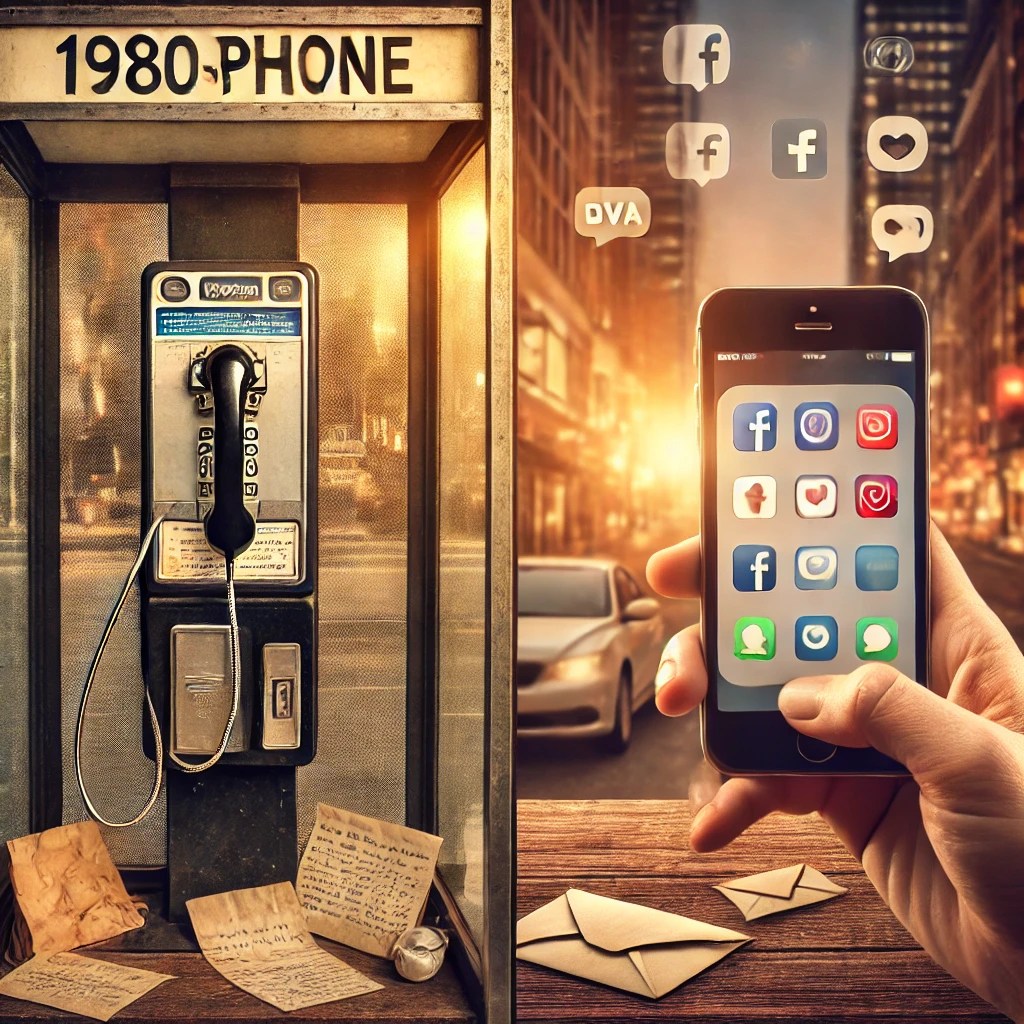
I was thinking about how different communication used to be when we were growing up. Back in the day, reaching out to someone wasn’t as simple as tapping a screen. You had to plan, to coordinate, and sometimes, you just had to wait. We Gen Xers witnessed one of the most dramatic shifts in communication history. We moved from payphones and handwritten letters to the digital, always-on world of smartphones.
Remember payphones? They were a lifeline when you were out and needed to make a call. You’d carry a couple of quarters in your pocket, just in case. Finding a payphone in working order was another story entirely. There was always that one booth with a broken receiver. Or there was graffiti covering the glass. Yet, despite their quirks, payphones were a public utility. They connected us to the people we needed to reach, even if only for a few minutes.
Handwritten letters were another staple of communication. They were especially important for maintaining long-distance relationships. There was something special about putting pen to paper. It involved choosing your words carefully. You knew that the recipient would read and hold your letter in their hands. The anticipation of waiting for a reply was all part of the experience. That patience added value to the connection.
Fast forward to today, and the way we communicate is almost unrecognizable from those earlier days. Smartphones have replaced payphones and handwritten letters with text messages, emails, and instant access to social media. You don’t have to plan your conversations around someone being home or near a phone. You can reach out anytime, anywhere, and expect an almost immediate response. The convenience is undeniable, but it’s also changed the way we interact with each other.
In many ways, the shift to digital communication has brought us closer. We can keep in touch with people across the globe. We can share moments in real-time. We stay connected in ways that would have been impossible just a few decades ago. Social media platforms allow us to see what our friends and family are up to. This is true even if we haven’t spoken to them in months. It’s easier to maintain a wide network of acquaintances and to rekindle old friendships with just a click.
But with all this accessibility, something has been lost too. The art of conversation has shifted; it’s more fragmented, more immediate, and often less thoughtful. We’re so used to quick replies and instant gratification. The depth and meaning of our interactions can sometimes get lost. The anticipation of a letter in the mail has been replaced by the ping of a notification. While that’s exciting in its own way, it’s different. The patience we once needed has been replaced by the need for speed.
There’s also the paradox of connectivity—being always available doesn’t necessarily mean being more connected. We are constantly in touch, but the quality of those interactions can vary. Sometimes, it feels like we’re communicating more, but saying less. The constant flow of information and updates can be overwhelming. It’s easy to lose sight of the meaningful connections we once treasured.
So, while I appreciate the advances that have brought us from payphones to smartphones, I can’t help but feel a bit nostalgic for the way things used to be. There was a certain magic in those slower, more deliberate forms of communication. It taught us patience, made us savor the connections we had, and made each interaction feel a bit more special.
As we move further into the digital age, maybe it’s worth remembering the lessons from our past. The technology will keep evolving. However, the value of meaningful communication will always stay the same. This includes whether it’s a phone call, a letter, or a message.
Stay connected, but don’t forget the magic of slowing down. 📞✉️

 I was thinking about...