
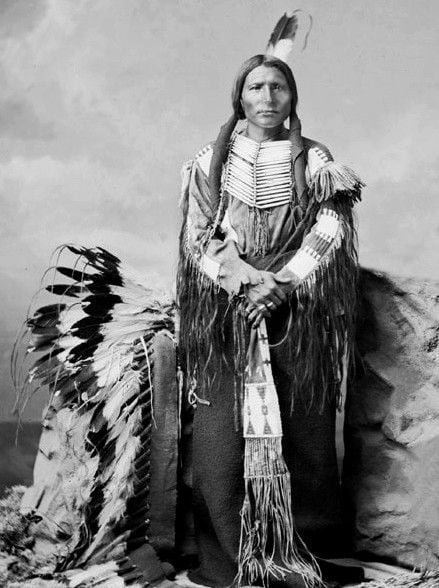
I Was Thinking About…Crazy Horse – A Sacred Hero
By Andy Lee
Among the legendary figures of the American West, the name Crazy Horse still conjures awe and fascination. Leader of the Oglala Lakota, this iconic warrior fought fiercely throughout the 1860s and 70s to defend the sovereignty of his people and their way of life from an encroaching American government. Though he lived barely over three decades, his mythic status as a defender of Indigenous land and dignity still resonates powerfully today.
As I reflect on his remarkable yet brief life, I’m struck by how Crazy Horse represents the highest Lakota (Sioux) ideals of honor, courage, and noble leadership in the face of tremendous threat. Though characteristically modest, his tactical brilliance and battle intuition earned him renown by his mid-20s as one of the tribe’s most gifted fighters. Yet war was a sacred duty for Crazy Horse, not a hunger for bloodshed. Love of home and spirit fueled his determination, not personal glory.
Contemporaries described Crazy Horse as exceptionally handsome, physically perfect in build, with refinement and grace in manner. More introverted by nature, he led by humble example rather than fiery oratory. Fiercely resolute while soft-spoken, Crazy Horse let strategic instincts and deeds, not ego, chart his course. This blend of quiet dignity with deadly prowess in combat made him particularly respected among both Lakota warriors and U.S. military foes.
Of course, the victors wrote the history that depicted Indigenous resistance as savage uprising. But we dishonor Crazy Horse by judging solely through enemies’ terms. In the Lakota worldview, defending their territories from an alien culture bent on erasing age-old life ways fulfills the ultimate righteous quest. By standards of his people struggling desperately against displacement, Crazy Horse’s courage warrants only veneration.
From early adolescence, Crazy Horse demonstrated uncommon skill as a fighter. He earned his first name Tasunka Witko (“His Horse is Crazy”) after bravely riding back and forth decoying enemies so fellow Lakota could retreat when vastly outnumbered in battle. Word soon spread through the tribes about the fearless prodigy whose daring reflected supreme confidence and connection with his steed.
Throughout the 1860s, Crazy Horse enhanced his reputation in clashes sparked by encroachment along Lakota and Northern Cheyenne lands. Tribal leaders noted his tactical creativity, physical resilience, and weapons prowess. Yet fame concerned Crazy Horse far less than safeguarding home as best he could, even in the face of inevitable defeat. For him, war became tragically unavoidable, but spiritual purpose fueled the fight.
The vision quest held deep meaning for Crazy Horse, guiding his conscience. During solitary fasting in the wilderness, warriors sought metaphysical allies and insight to navigate coming trials. Crazy Horse encountered his mentor, the Holy Man of the Hills, who prophesied both glory and heartache ahead. This prophecy seemed prescient when he later suffered great personal losses amidst renowned wartime leadership.
As the wars intensified, older Lakota chiefs recognized Crazy Horse’s gifts to organize warriors most effectively. They named him Shirt Wearer, ceremonial status carrying high tactical responsibilities and honor during combat. Celebrated fighting alongside legendary leaders like Sitting Bull at the 1876 Battle of Little Bighorn cemented Crazy Horse’s fame. Outfighting Custer and obliterating his forces marked the Lakota’s last monumental triumph.
But the tides turned when reservation confinement and broken treaties sparked another resistance. Sadly, Crazy Horse’s final courageous efforts failed to stop the conquest he always foresaw in his heart. Knowing death approached but refusing to flee, he combatted injustice until the very end. In September 1877, diehard Lakota rivals conspiring with U.S. cavalry arranged his fatal bayoneting. He died only in body, though – Crazy Horse’s fighting spirit and symbolic power live eternally.
Nearly a century and a half has passed since Crazy Horse’s death, but his legacy burns bright as ever, awakening new generations. In honoring his memory, may we reflect on timeless truths about connection to the land, fidelity to one’s people, and the nature of true bravery when facing injustice. For today, I was thinking about Crazy Horse, iconic Lakota warrior whose selfless service to his nation’s welfare represents heroism at its purest. May his example continue teaching us for years to come.
Stay curious, keep exploring! 😊
 I was thinking about...