
I Was Thinking About…The Astronaut and the Navajo Elder
By Andy Lee
The 1960s marked the peak of America’s fascination with space travel. NASA was barreling full-steam towards an audacious goal – not just orbiting Earth, but actually landing men on the moon by decade’s end. The Apollo program captivated global imagination, as astronauts ripped across the Florida sky and scientists puzzled out how to slip fragile humans through the cosmos and back unscathed.
Yet lost amidst the otherworldly gadgets and soaring rhetoric dwelled the fact that NASA’s work took place on lands where an utterly foreign first contact had occurred just centuries prior. Lands that still housed proud native communities who retained cultural breaths predating pilgrims or pioneers.
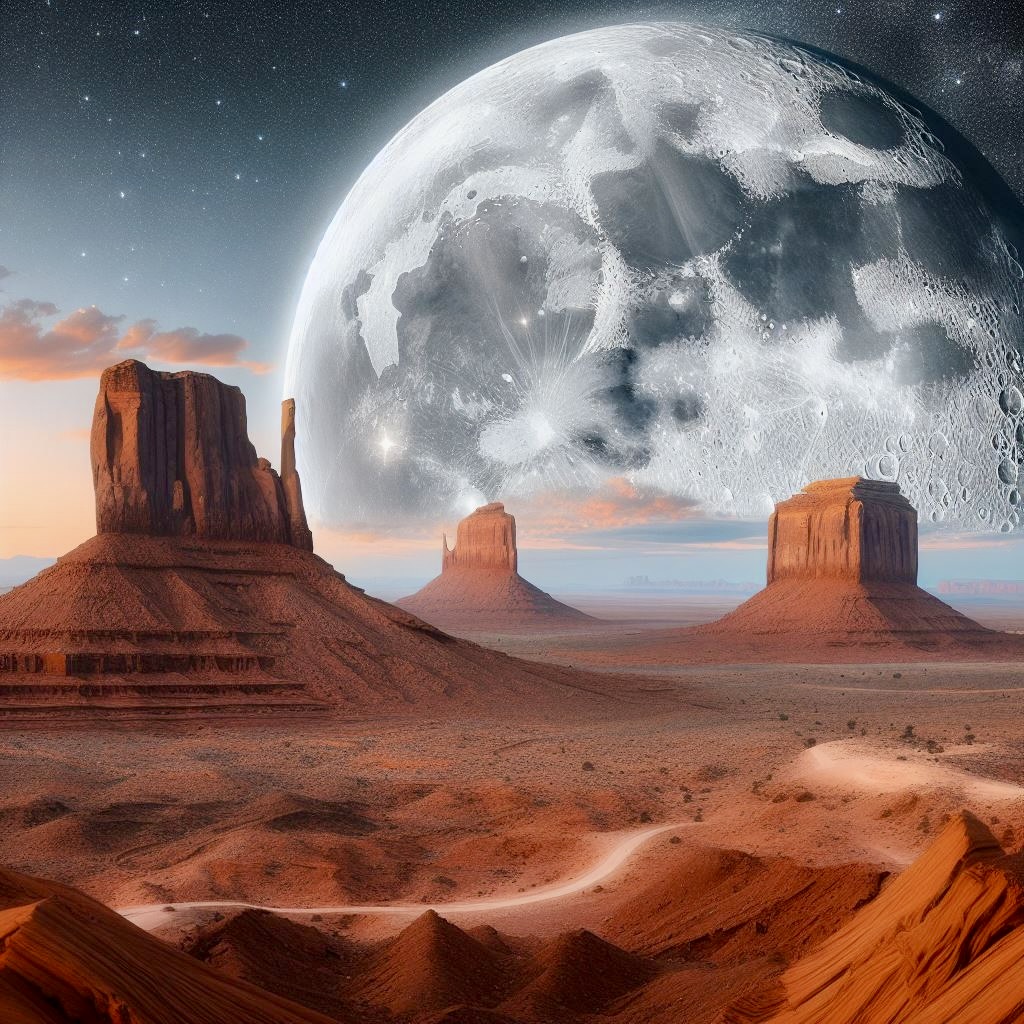
In preparing for mankind’s next giant leap, NASA coordinated astronaut training missions across the American Southwest. One arid day in the late 1960s, somewhere on the vast Navajo Nation reservation, the space crew crossed paths with an elderly Navajo shepherd and his adolescent grandson.
As the silver-suited astronauts puzzled through equipment near scrubby hills dotted with sheep, the elder tribesman and wide-eyed boy spotted the group. Marveling at the strange beings wandering native soils, the grandfather interrogated his grandson, asking what in fact these oddly-clad trespassers sought in Navajo territory.
When the grandson shared that these were astronauts readying to voyage through skies and onto the moon itself, the elder Navajo grew fascinated. Though separated by language, lives and generations, some innate desire to understand connected under that desert sun.
Seeing an opportunity for intercultural exchange, the astronauts described plans to deposit goodwill messages in multiple languages on the Moon’s surface – including greetings from across Earth for any future being who discovered traces of this milestone.
The Navajo elder’s eyes lit up. Through his grandson interpreting excitedly, the explorers asked if the old man might record a message to share with the cold lunar landscape as well. They produced a tape recorder to capture audio posterity from this remote corner of America.
Grinning with pride, the patriarch cleared his throat and shared an earnest Navajo declaration while his amused grandson listened. The NASA team had no hints about the 69 year-old’s poetic observation. But the true value lay in extending this unlikely invitation – including one of America’s first voices in communing with the cosmos’ frontiers.
Following a successful 1969 moon landing, the NASA team returned to train in the Southwest Navajo lands. One day, the original official who’d recorded the elder’s message spotted the old man gracefully aging alongside his teenage grandson. Feeling the glow of global applause still lingering after Apollo 11, he rushed excitedly to inform the Navajo elder that his greeting now resided on the Moon’s Sea of Tranquility, thanks to those friendly astronauts and their tapes transported 200,000 miles away just months before.
The elder peered curiously while his smile widened, wrinkles framing bright eyes. His teenage grandson fell into hysterics next to him. As the NASA rep’s own grin wavered, slow realization dawned that a wider joke clearly lurked beneath the young man’s laughter.
Sheepishly now, feeling the first pinpricks of global neighbors colliding, the American space pioneer politely inquired what exactly the elder tribal leader’s recorded message on the moon said anyways. After burying the last chuckles in his palm, the young Navajo translated warmly on his elder’s behalf:
“Beware…white man will come to steal your land.”
What a spectacularly perfect message, I found myself thinking! One so cheekily resonant, so economical yet layered, that I couldn’t help applauding the elder’s wisdom tying past and present. His teaspoon of casual commentary spoke volumes about humanity’s reach exceeding its understanding. About intentions and impacts scattering worlds apart sometimes, no matter trails we blaze outward or technologies constantly “progressing.”
In literally rocketing ahead building gleaming ships, those NASA scientists neglected realizing THEY were in fact the aliens dropping in from alien worlds here. Who knew how many generations that Navajo chief’s kin had pointed skyward from those remote mesas, guiding petty dramas and myths under countless miles of stars? They were stardust themselves long before astronauts sailed overhead.
Surely that well-earned sprinkling of healthy skepticism about strangers’ scouting, even dressed strangely, came from remembering foreign germs leveling native numbers overnight not long before. Of cowboys and railroads and land seizures so traumatic the culture nearly perished during infamous marches barely 100 years prior.
Yet the elder also recognized that any opportunity opening mustreveal wider humanity. By agreeing to add his voice, however tongue-in-cheek, he understood that progress only blossoms through planting tiny mustard seeds of optimism no matter past grievances. The NASA team’s forthcoming invitation towards inclusion deserved reciprocating within reason. Even if hijinks illuminated remaining fences.
What can WE learn examining this delightful buried space race vignette now, during much darker days of renewed isolationism? Are there parallels to those NASA scientists being so focused on technological feats, they narrowly missed eyeing Navajo humanity around them, literally seeing only strange lands to be mined for experimental stamps without feeling inhabitants’ enduring heartbeats?
Might we acknowledge zones today where empathy or curiosity lapses keep us from comprehending foreign experiences in our zeal towards “the future”? Can we grow more attentive about unintended effects from our individual or national priorities and actions? Are we humble enough to recognize moral obligations endangering vulnerable groups in pursuing personal or national self interests?
Exploring new frontiers always demands the utmost compassion and care moving forward. Just like the Navajo elder winkingly warned, what looks today like barren landscapes often turn out hosting civilizations awaiting introductions centuries overdue. But progress depends on both reaching out hands AND realizing who stands overlooked waiting before us too.
Stay curious, keep exploring!
P.S. Well, wasn’t that a fun tale to get temporarily lost in? After drafting this piece, I dove into the research rabbit hole seeking to verify all the quirky details about astronauts stumbling into Navajo country. But after days clicking every search result, turns out there’s zero factual proof this delightfully eccentric exchange actually happened.
Every echo simply leads back to the same unconfirmed story passed around the internet, likely just a talented storyteller’s imaginary scene. And as much I wanted to believe this mythic meeting perfectly captured eras colliding out in the desert, alas, it seems some legends thrive by our imaginations selecting magic over accuracy.
But you know what? My search wasn’t entirely in vain or wasted time. Even if fictional, a story that compelling shows the residue of emotions and histories still awaiting reconciliation. And poetry that taps collective longing always contains its own profound truth, facts be damned.
At end of day, it was a pleasure to briefly inhabit such an irresistible scene between frontiers — one honoring how wisdom takes infinite forms while progress depends on planting mustard seeds of optimism. And wherever astounding possibility glimmers, humans will perpetually chase, whether towards moonshots or common ground right here.
Until next time…!
 I was thinking about...