
I Was Thinking About…The Hidden History of Thanksgiving
By Andy Lee
Thanksgiving enjoys sacred status as a beloved American tradition centered around family, feasting, and gratitude. Yet peeling back the holiday’s feel-good folklore reveals a far more nuanced portrait where tension and tragedy walk hand-in-hand with triumphs. In our rose-colored national memory, we’ve airbrushed away the shadows of Thanksgiving’s complicated genesis where disease, religious discord and violence all loom ominously over utopian visions of harmony between Pilgrim and Indian.
The newcomer Pilgrims and Indigenous locals were enmeshed in a fraught power imbalance from their first encounters. In the years preceding the Pilgrims’ 1620 arrival, European fishermen had introduced unfamiliar illnesses which erupted into devastating plagues, wiping out many natives who lacked resistance. Some estimates suggest up to 90 percent of coastal New England tribes may have perished, creating a societal void the remaining groups scrambled to manage as more strange ships began encroaching.
Squanto, the famed native who taught the English settlers cultivation techniques has long been depicted as a friendly ambassador eagerly extending goodwill. Yet the reality of his relations with Europeans proves far grimmer. In 1614 an English captain had tricked Squanto aboard his trade vessel, before sailing away and selling the young man into slavery. After monks purchased Squanto, aiming to convert him, he somehow escaped to London in 1619. Hence upon returning to his homeland village Patuxet, only to find all tribespeople dead from disease, befriending more English hardly came naturally.
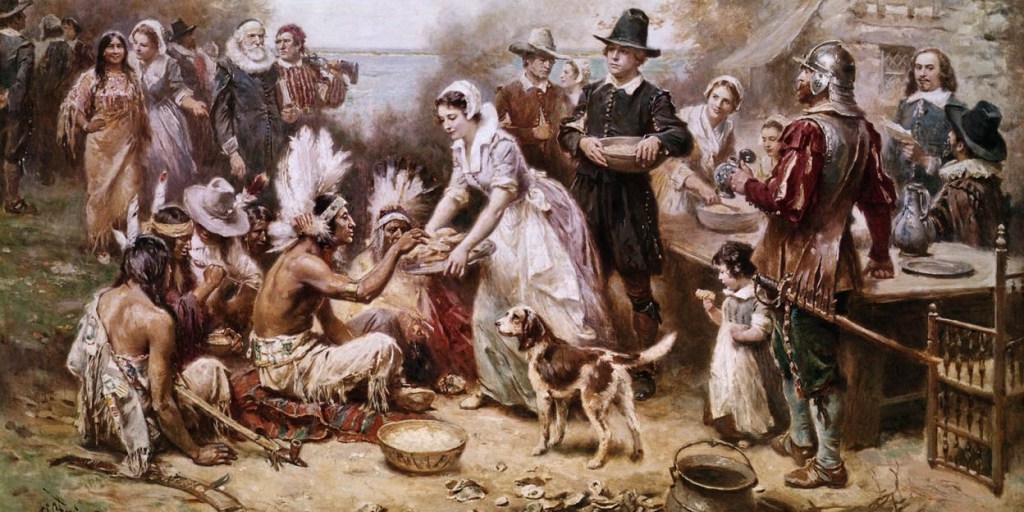
Likewise, the 1621 autumn feast shared with the Pilgrims and local Wampanoag tribe, headed by Chief Massasoit, concealed strain beneath surface pleasantries. Attending with roughly 90 men, Massasoit partly sought to reinforce political leverage over the new faction on Wampanoag land, not purely partake in a congenial meal. And subsequent colonial era “Thanksgivings” would prove far bloodier than parchment fictions; one notorious 1637 Plymouth feast celebrated ally tribes helping Massachusetts colonists massacre over 400 Pequot people at Mystic, Connecticut. For the vanquished, giving thanks was surely complicated.
So how did the holiday’s more troubling history fade from public memory? Much credit goes to 19th century Northeastern elites like Godey’s Lady Book editor Sarah Hale, who relentlessly petitioned for Thanksgiving to become a feel-good national holiday merging fealty with family. During the precarious days around Civil War, leaders embraced New England nostalgia and the concept of Thanksgiving as a unifying tradition – reality not required.
I found myself fascinated by the true backstory of Thanksgiving after realizing even cherished national holidays demand honest investigation. Smoothing past unpleasant portions of history ultimately does everyone a disservice. Relationships between Indians and English colonizers involved more menace than grade school myths suggest. Examining interwoven prejudices, betrayals and tragedies allows modern Americans to make sounder moral judgements and wiser policy decisions overall.
For instance, properly contextualizing the Pilgrims’ shaky survival at the largesse of natives like Squanto better spotlights the dizzying devastation wrought by European illnesses. This seeds natural empathy for Indigenous peoples still wrestling associated trauma intergenerationally. And avoiding romantic fictions about friendliness tempering early colonial violence creates space to condemn the 1975 Wounded Knee Massacre, when American Indian Movement activists occupying the Pine Ridge Reservation were fired on by Federal forces, killing two tribal members.
In the end, grappling with unvarnished history grants perspective for personal growth too. Recognizing the conquest and cruelty entwined with Thanksgiving’s foundation hopefully breeds less national hubris about past wrongdoings, present blindness towards minorities, or assumptions of future entitlement. Appreciating blessings should stir more concerted efforts towards justice.
Stay thoughtful, keep exploring! 😊
 I was thinking about...