
I Was Thinking About…The Unexplained Disappearance of the Anasazi in the American Southwest
By Andy Lee
The American Southwest holds many mysteries, but perhaps none so perplexing as the disappearance of the Anasazi people. Spread across the red rock canyons and towering mesa tops stand the eerie ruins of their stone villages and ingeniously engineered cliff dwellings. These crumbling structures pay tribute to a once thriving civilization that inexplicably vanished from this landscape over 700 years ago. Who exactly were the Anasazi people and what fate transpired to this ancient culture? Their abrupt end and the enigmatic secrets they left behind continue to haunt the desert for centuries.
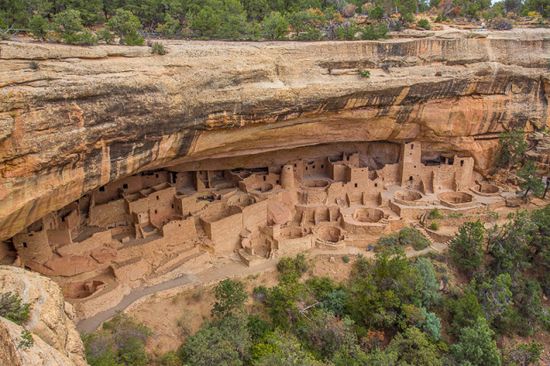
For over 700 years, the Anasazi people flourished in an arid climate that required creative solutions for survival. They cultivated crops like maize, beans, and squash using extensive irrigation canals, check dams, terraced fields, and reservoir systems carved into the rugged desert landscape. The Anasazi masonry skills can be appreciated in the elaborate, multi-story dwellings and structures built right into the cliffs, like the iconic Cliff Palace still standing at Mesa Verde National Park today. Many sites show evidence of advanced astronomical understanding used to guide Anasazi architecture, agriculture, and cultural rituals.
But sometime around 1300 AD, the Anasazi abruptly departed their communities, leaving behind belongings like precious woven blankets, sandals, and food stores of corn seed for the next growing season. Even prominent structures that represented massive investments of time and labor were largely abandoned within a generation. Archaeologists confirm this rapid depopulation and migration from their ancestral heartland was orderly and peaceful, without any signs of warfare or invasion by another tribe. So, what happened to the Anasazi after centuries of developing a thriving culture so well adapted to the harsh Southwestern climate? What could explain the swift and complete disappearance?
Many clues point to environmental factors like climate change and prolonged drought as probable contributing causes. Dendrochronology evidence from tree ring samples indicates that a 50-year megadrought afflicted the region in the late 1200s AD. This may have been the most severe drought in over 4,000 years, wreaking havoc on the Anasazi’s agriculture-based food supply. With their carefully tended crops dying and critical water sources drying up, the Anasazi were potentially forced to the point of near starvation. This would have compelled them to desperately seek new homes along the banks of perennial rivers and streams. Higher regional populations and increased competition for dwindling resources likely strained their societal structure and cooperative bonds. However, these environmental pressures had been present at times before for hundreds of years. So why suddenly vacate elaborately constructed villages, spiritual sites, and agricultural features that had been occupied for over two centuries?
The shifting nature of Anasazi religious practices and customs provides another lens to examine their rapid disappearance. In Chaco Canyon, late-era evidence shows the substitution of larger, once communal ceremonial houses with smaller kivas used for more secretive, exclusive ceremonies. Macabre archaeological finds like dismembered or mutilated human remains buried in ceremonial context hint at the emergence of possibly more violent or desperate rituals, perhaps in an attempt to appease their deities. This may suggest some fundamental shift or even catastrophic breakdown in their cosmological belief system that spurred a loss of faith in their traditional, communal way of life. However, the continuing ingenuity and complexity demonstrated in places like Chaco Canyon’s intricate astronomical architectural alignments also argue against an abrupt abandonment for purely spiritual reasons.
Ultimately, the reasons for the Anasazi’s startlingly rapid depopulation and migration by 1300 AD remain largely enigmatic. Clearly, prolonged drought placed significant stress on their society, but cycles of drier periods had been endured before. Their religion clearly transformed in some ways but retained layers of meaning, purpose, and celestial focus. Internal strife, famine, disease, or other social pressures can’t be ruled out but remain unsupported by physical evidence. Even as 21st century archaeologists and researchers uncover more fascinating artifacts and sites each year, the Anasazi remain in some ways inscrutable. Their memory lives on as spiritual ancestors in the unified oral tradition of today’s Puebloan peoples but offers only incomplete answers to this ancient vanishing act.
Today we can only marvel at the cultural and material accomplishments of the Anasazi and speculate on what more might have been achieved had they remained. The ingenious structures left behind stand preserved and protected in sites like Chaco Culture National Historic Park and Mesa Verde National Park, where descendants and modern visitors walk amongst the silent stones left by the Ancient Ones and contemplate the mysteries. Their remains echo not failure or demise, but rather resilience, creativity, and complex purpose even as the circumstances shifted. Centuries later, the inner lives and motivations of the Anasazi remain beyond our grasp. But the profound historical riddle posed by their disappearance invites us to expand our imaginations, heed the warnings of the past, and forge new understandings that may guide future generations. Their departure will forever haunt the fading plaster walls and dusty potsherds of this land, but their legacy still nurtures human creativity, adaptation, and wonder today.
Stay curious, keep exploring. 😊
Our journey into the overlooked and vanished is just beginning – stick around to see what other revelations await in the archives.
 I was thinking about...