
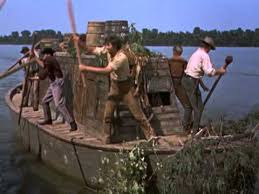
I Was Thinking About…The River Pirates of the Mississippi
By Andy Lee
The Mississippi River has long been the lifeblood of commerce in the United States. Stretching over 2,300 miles from Minnesota to the Gulf of Mexico, the Big Muddy was a vital shipping route for cargo and passengers in the 19th century. And where there were ships loaded with valuable goods plying the waters, there were pirates ready to steal them.
River piracy reached its height in the decades before the Civil War. Outlaws took advantage of the remote stretches of river to attack passing boats and make off with money, cargo, or even the boats themselves. Many pirates operated in gangs from hidden bases on islands and inlets along the riverbanks. They would spring out to ambush ships, then disappear back into their secret lairs. Some were even bold enough to operate openly right out of river ports.
One of the most notorious Mississippi pirate leaders was Samuel Mason. Mason had already lived a colorful life as a frontier outlaw and riverman before he turned to piracy in the 1790s. His pirate crew would brazenly seize entire ships along the Ohio and Mississippi rivers, stealing cargo and either keeping the boats or burning them. Mason imposed a “tax” on river traffic, promising safety to any boat that paid up.
For example, one time Mason and his gang attacked the cargo ship Chesapeake, viciously killing two crew members before looting the ship and setting it ablaze. They carried off thousands of dollars in goods meant for settlers in Spanish territory.
Mason’s gang controlled several islands near the mouth of the Ohio River that served as their stronghold. From this strategic location, they struck out at merchant ships loaded with goods headed downriver to New Orleans and the Gulf. They also raided settlements in Kentucky and were blamed for kidnappings in the region. Boat crews lived in fear of encountering Mason’s pirates in the winding channels of the Kentucky rivers.
River piracy grew so rampant that in the early 1800s a group of flat boatmen dared to stand up to the outlaws. They formed a vigilante anti-piracy force led by the Harpe brothers, who were notorious frontier bandits themselves. The vigilantes managed to capture Samuel Mason and executed him without trial, effectively ending his reign of terror on the river.
But Mason was just one of many pirates plundering the Mississippi during the heyday of river borne trade in the early 19th century. Another gang was led by John A. Murrell, known as the “Great Western Land Pirate.” Murrell’s strategy was to recruit pirates from local river gangs and coordinate their attacks along hundreds of miles of the Mississippi River.
Murrell supposedly commanded over a thousand pirates and aimed to plunder dozens of ships and even sack the bustling river port of New Orleans. But he was captured by authorities in Tennessee before carrying out his grand plan and sentenced to 10 years in prison. Though Murrell later escaped, his piracy network had been broken up.
While piracy faded on the river by the 1850s as trade moved to railroads, the Mississippi pirates left behind a legacy of fear. Their exploits became the stuff of legend, exaggerated in popular books like Mark Twain’s “Life on the Mississippi.” The grand old steamboats that replaced flatboats as the main transportation on the river were faster and better armed to deter pirates.
But in frontier days, travelers learned to be wary of pirates hiding around the next riverbend, ready to attack. Stories were told of pirates overtaking ships, stealing cargo, and kidnapping passengers for ransom. Women and children lived in terror of being captured by the ruthless outlaws. And crews never knew if a passing boat might be a pirate ship flying false colors, ready to strike.
The remote areas along the Mississippi provided the perfect environment for pirates to thrive. They could easily hide out in the bayous and inlets dotting the river. From there, they could launch surprise attacks on passing ships before escaping back into the wilderness. Attempts by authorities to root them out usually failed in the treacherous swamps and backwaters where the outlaws lurked.
Some river pirates were highly organized criminal syndicates, with informants and collaborators in many river ports and settlements. But most operated in small, loosely affiliated gangs, informally coordinating to patrol certain sections of the river. Despite their disorganization, they wreaked havoc on Mississippi shipping for over 50 years.
Increasing pressure from local militias finally forced authorities to take more decisive action against the pirates. Reinforced patrols were established along dangerous stretches of river to protect shipping. And states bordering the river passed anti-piracy laws, some even allowing bounties to be collected for killed or captured pirates.
The river pirates who stalked the Mississippi in the early 19th century earned their reputation as some of America’s most notorious outlaws. They took advantage of the lawless frontier to plunder America’s greatest waterway until steamboats, vigilantes, and authorities finally gained control. Their legacy lived on in folklore and literature about the untamed era of outlaws on the rivers.
Stay curious, keep exploring. 😊
 I was thinking about...