
I Was Thinking About…John Wesley
By Andy Lee
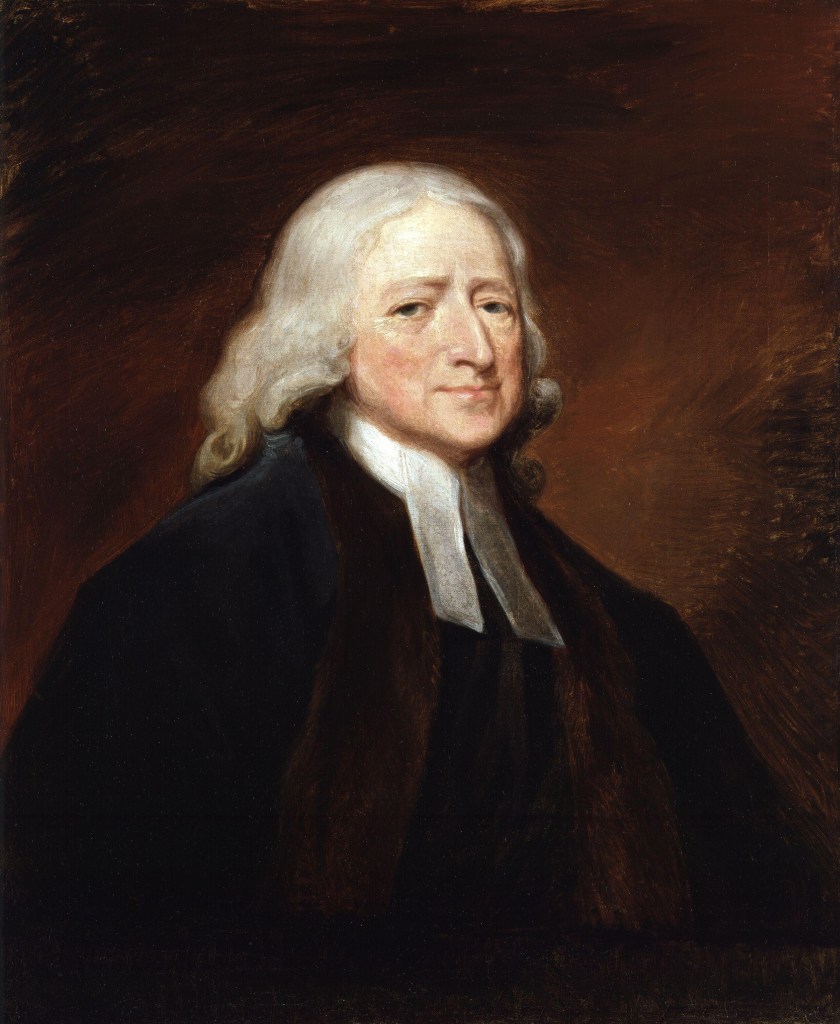
When I reflect on pivotal figures in 18th century Christianity, the name John Wesley stands out. Wesley’s tireless efforts to revive faith and scriptural holiness within the Anglican Church directly birthed the Methodist movement. Despite intense opposition, he championed taking the gospel to marginalized groups neglected by institutional religion. As I consider Wesley’s far-reaching impact, I’m struck by his unwavering commitment to social justice and spiritual renewal.
Born in 1703 to an Anglican rector, Wesley entered Oxford in 1720 intending to become a cleric himself. While there, he co-founded the Holy Club, a group devoted to spiritual disciplines like prayer, scripture reading, and charity. Their methodical spiritual practices earned them the nickname “Methodists.” Ordained in 1728, Wesley served briefly as his father’s curate before returning to Oxford as a lecturer and fellow.
In 1735, Wesley reluctantly accepted an opportunity to serve as a missionary in Georgia. Though ultimately unsuccessful, his time there convinced him of the transformative power of faith. On returning to England in 1738, he experienced spiritual conversion after attending a Moravian meeting. Soon after, Wesley felt his “heart strangely warmed” during prayer, cementing his commitment to Christ.
Renewed spiritually, Wesley became convinced of the need for reform within the Anglican Church. He began open-air preaching to reach working class crowds, finding the poor and deprived thirsty for the gospel. As spiritual revival spread through England, Wesley battled accusations he was promoting dissent and unauthorized preaching. Angry mobs sometimes pelted him with stones. But he persevered in taking the message to marginalized groups.
By the 1740’s, the movement we now call Methodism was blossoming rapidly. Wesley trained and commissioned lay preachers to meet the demand, expanding the reach of the gospel. He controversially allowed women to preach as well, valorizing their spiritual leadership. Despite criticism, Methodists remained part of the Anglican church into the 1790’s.
At its core, early Methodism emphasized spiritual rebirth through faith in Christ, backed by personal disciplines like prayer and scripture study. But Wesley also passionately advocated for social justice. His essay Thoughts Upon Slavery powerfully denounced human bondage as an affront to God. Wesley promoted education, health care, and labor rights across Britain. He proclaimed spiritual transformation must manifest in caring for others.
Reflecting on Wesley challenges me to consider my own role in continuing his legacy. Do I display the spiritual vitality and discipline that Wesley modeled? Am I willing to transcend comfort and convention to reach marginalized groups with empowering good news? Does my faith compel me to confront social evils as forcefully as Wesley did? His courage gives me hope that positive change is possible, even in bleak times.
Wesley’s movement changed Christianity by taking it to the streets and valuing spiritual experience over empty religiosity. He empowered ordinary people to take ownership of their faith and act as leaders. The Methodist societies nurtured soul and body, providing community for outcasts while meeting practical needs. Wesley lived out the truth that vibrant relationship with God mobilizes us to serve others.
John Wesley’s belief in spiritual and social holiness transformed 18th century England. But it wasn’t always easy or popular. He faced distrust, violence, betrayal, and disappointment alongside remarkable success. As I reflect on his legacy, I feel challenged to persist through resistance and setback in pursuing a more just, equitable and loving world. One person with courageous faith can spark a revolution of the heart that changes history, as Wesley’s life proves.
Today, Methodist churches retaining Wesley’s original vision continue impacting communities worldwide. Wherever faith kindles both spiritual vigor and social conscience, Wesley’s influence can be found. His life beckons Christians of all traditions to reunite converting grace with compassion, fervor with justice, and doctrine with deed.
For today, I was thinking about John Wesley, whose tireless faith and vision gave rise to modern Methodism. May we honor him by matching his spiritual depth and social conscience.
Stay curious, keep exploring. 😊
Enlighten yourself on the overlooked – subscribe to receive my latest historical finds.
 I was thinking about...