
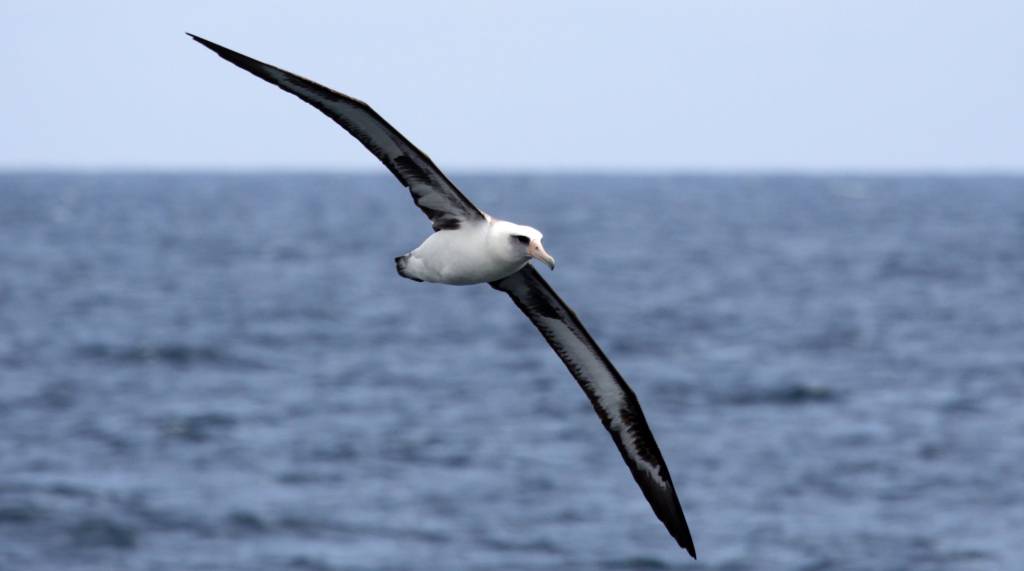
I was thinking about…the albatross.
By Andy Lee
I was thinking about the albatross the other day. I’m intrigued by these large seabirds and their incredible abilities. With wingspans up to 11 feet across, albatrosses are built for gliding long distances over the open ocean.
Albatrosses can be found across the southern hemisphere, from the Antarctic to Australia and South America. Their range covers vast expanses of the Pacific, Atlantic, and Indian Oceans. There are around 22 different species worldwide, with the Wandering Albatross being the largest with its 11-foot wingspan.
One astounding fact about albatrosses is that they can spend up to six years at sea without ever touching land after fledging. During this time, they sleep on the ocean’s surface and have no need for a nest or perch. Their tube-shaped nostrils help keep out salt water while breathing. They also have special glands above their eyes that allow them to drink seawater by filtering out the salt. For half a decade the ocean provides everything an albatross needs to survive.
Albatrosses have evolved perfectly to life at sea over millions of years. Their sharp, hooked beak is ideal for grabbing slippery prey like fish, squid, and other marine animals while in flight. One of their most impressive adaptations is a flight technique called dynamic soaring. By swooping down close to the ocean waves, they can gain momentum from the faster wind speeds near the surface. Then they turn upwards and swoop back down repeatedly, essentially harnessing the wind to propel themselves forward. Using this method, albatrosses can fly 500-600 miles in a single day without flapping their wings once!
These birds are monogamous, mating for life. Each year they return to the same remote island or outcrop to breed and nest. One famous albatross breeding colony is on Midway Atoll, located in the middle of the Pacific Ocean. Midway is home to over one million Laysan and Black-footed Albatrosses, representing the world’s largest albatross breeding colony. The parent albatrosses take turns incubating a single egg for around two months. After it hatches, they devote an incredible amount of time and energy to feeding and nurturing the chick for 5-6 months until it fledges.
In maritime culture, the albatross holds deep symbolic meaning for sailors. To fishermen and ship crews, spotting an albatross was considered a good omen bringing fair winds. In the 19th century poem, The Rime of the Ancient Mariner by Samuel Taylor Coleridge, the albatross is a herald of good fortune and friendly skies. The mariner thoughtlessly kills the albatross with a crossbow bolt. As a result, the ship is cursed with terrible misfortune and becalmed at sea. The dead albatross hangs ominously around the mariner’s neck, becoming a symbol of his sin and guilt for destroying an innocent creature. This literary work established the albatross as a powerful metaphor for the consequences of human folly, cruelty, and disruption of nature. Even when the mariner eventually atones, the albatross still affects his psyche, reminding him of lessons learned.
Tragically, real-world albatross populations are threatened by modern human activity. As scavengers, albatrosses feed on prey found floating on the ocean surface. This includes plastics and garbage. Unable to distinguish plastic from food, adult albatrosses end up feeding plastic debris to their chicks. Many chicks die from starvation or ruptured organs caused by ingesting plastic. On Midway Atoll it’s estimated that 200,000 albatross chicks die each year from plastic poisoning.
Organizations like the Midway Atoll Refuge are working to reduce the plastic pollution on the island and monitor albatross populations. Cleanup projects remove over 10 tons of plastic from Midway’s beaches each year. Public awareness campaigns by the Albatross Coalition and others highlight the impacts of plastics and build support for policy change. However, there is still much work needed to ensure the future survival of these iconic seabirds. We can all help by reducing single-use plastics, properly disposing of waste, and supporting ocean conservation efforts.
They are one of the most impressive masters of flight in the natural world. Their gigantic wings carry them effortlessly over vast oceans for thousands of miles each year. We must ensure these amazing creatures are protected for future generations.
The albatross is a symbol of freedom, endurance, and grace. Their epic migrations and survival in harsh environments are incredibly inspiring. The albatross deserves our respect, awe, and environmental stewardship. It would be a true loss for our planet if these seabirds disappeared due to human activity.
Stay curious, keep exploring. 😊
There are always more oddities and wonders worth writing about – subscribe for more.
 I was thinking about...