
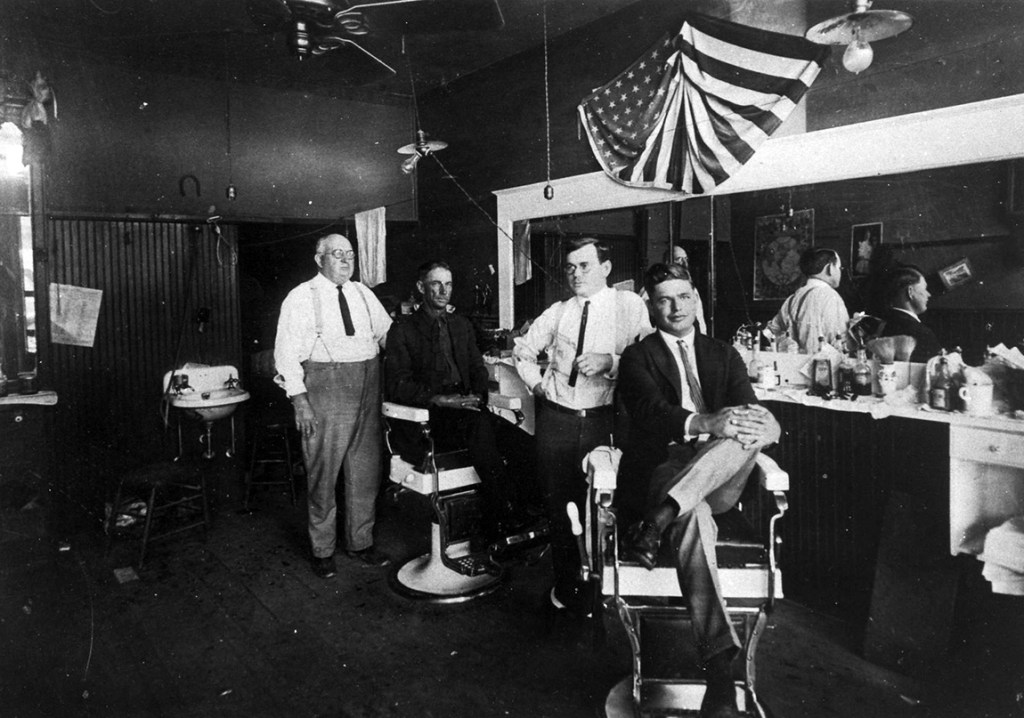
I was thinking about…Shave and a haircut, two bits.
By Andy Lee
The familiar tune “a shave and a haircut, two bits” has its origins in early 20th century American barbershop culture. While its exact origins are unclear, the tune developed as a way for barbers to call out to potential customers that their services were available. Here’s a look at the history and meaning behind this classic melody.
The phrase “two bits” refers to 25 cents, which was the cost of a basic haircut or shave in the early 1900s. A “bit” was slang for 12.5 cents, derived from the Spanish currency called the peso which was divided into eight reales or “bits.” So, two bits meant two quarters, or 25 cents. The haircut and shave were simple, no-frills services aimed at working class customers.
The distinctive rhythm of “shave and a haircut, two bits” is known as the “Shave and a Haircut” rhythm. It follows a simple seven-note pattern, with rests in between each phrase:
Da da da da da… (rest)… da da
This rhythmic pattern was likely adapted from the “shave and a haircut” calling song that barbers vocalized to potential customers. The first five notes mimic the sound of a straight razor sharpening, while the final two notes represent the snipping sound of scissors cutting hair.
The tune became popularized through early 1900s vaudeville acts and barbershop quartets. Comedians like Billy Jones and George Bickel utilized the question-and-answer format in routines, with one posing the “question” of the first five notes and the other answering with the final two. The Marx Brothers often incorporated the melody into their comedic musical numbers as well.
The use of “shave and a haircut” as a secret knock can be traced back to the 1920s during Prohibition. Speakeasies and bootleggers used the distinctive rhythm as a password for entry, alternating the knock between patrons and doormen. The tune’s question-and-answer structure allowed for identification between people on opposite sides of a door.
Over the decades, “shave and a haircut” became ingrained in pop culture through its use in countless cartoons, movies, TV shows, and commercials. Animated characters like Bugs Bunny and Woody Woodpecker employed the tune as a way to grab attention or annoy antagonists. Warner Bros used the rhythm at the end of its Looney Tunes episodes, a tradition that continues to this day.
The melody also appears across musical genres, from classical compositions to rock songs. George Gershwin incorporated the tune into his opera Porgy and Bess, while Aerosmith mimicked the rhythm in their 1970s hit “Walk This Way.”
Beyond the American musical landscape, “shave and a haircut’s” cultural impact can be seen internationally as well. In Mexico, the tune is known as “La Raspa” and is a popular folk dance song. European composers like Dmitri Shostakovich have also referenced the rhythm in their symphonic works.
So, while this simple 25-cent haircut may be a thing of the past, its catchy musical calling card lives on. The tune tagged at the end of jokes, cartoons, and ads continues to evoke barbershop nostalgia and pop culture whimsy today. Even distorted, cut-off, or rearranged, people still recognize the familiar “Shave and a Haircut” rhythm. A melody once used to flag down customers for a trim and a shave remains a permanent part of the musical landscape, both in America and around the world.
Stay curious, keep exploring. 😊
Do you appreciate learning obscure details from times gone by? Subscribe to have insights on overlooked history delivered to your inbox for free. Feed your curiosity by joining our subscriber list to be notified when new posts are published.
 I was thinking about...