
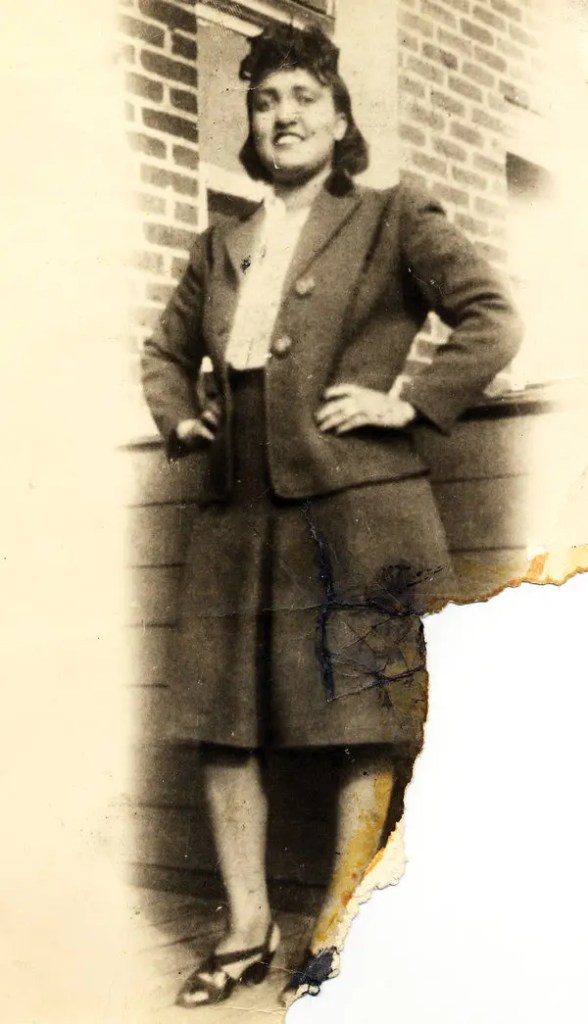
I Was Thinking About…Henrietta Lacks
Though unknown to most Americans, Henrietta Lacks has a profound hidden presence in countless lives through her unique contribution to modern medicine. Her cancer cells, taken without consent in 1951 as she battled terminal cervical cancer, became the first “immortal” cell line, enabling major scientific breakthroughs in the ensuing decades. Looking back on her incredible story that has come to light, several sobering aspects around ethics, exploitation, and race stand out.
Henrietta Lacks, a working-class African American woman raising five children in Jim Crow-era Baltimore, developed devastating cervical cancer. At Johns Hopkins Hospital, one of the few leading institutions accepting Black patients but segregating wards, renowned gynecologist George Gey took tumor samples from the 31-year-old mother during a diagnosis. Lacks perished months later in 1951, never knowing her cells were living on, dividing endlessly in Gey’s lab.
Dubbed “HeLa,” her robust cell line proved an ideal medium for researchers, as Lacks’ cells could survive and multiply indefinitely. This immortality revolutionized medical science. For the first time, researchers had access to a stable, perpetual cell culture enabling long-term experiments previously impossible with cell samples that expired after several replications.
HeLa cells quickly yielded major research breakthroughs. Their durable nature allowed Jonas Salk to develop the monumental polio vaccine in the 1950s saving hundreds of thousands of lives. HeLa cells helped reveal crucial chromosomal differences between cancerous and healthy cells, unlocking mysteries of malignant growth. Scientists have since used HeLa cells to study countless illnesses, including cancer, HIV/AIDS, Parkinson’s, hemophilia, and many more. Their unparalleled versatility has powered over 60,000 diverse medical studies that have profoundly advanced scientific knowledge and saved innumerable lives.
Yet neither Lacks nor her family were ever compensated or acknowledged initially, since regulations around informed consent and profit sharing for biological materials used in research did not yet exist. The descendants of Lacks lived in poverty lacking health insurance, while their matriarch’s cells spawned a multi-million-dollar industry enriching others but not her own kin. This grave injustice only came to light in the 1970s after author Rebecca Skloot began intensively researching the forgotten woman behind this medical miracle.
The revelation shocked and angered Lacks’ children, who grew up poor, often lacking even health insurance. “She’s the most important person in the world, and her family living in poverty. And she’s still black…and we still don’t get it,” lamented daughter Deborah Lacks. Henrietta’s exploitation typified past abuses of African Americans to advance medicine without consent, nor compensation.
Rebecca Skloot’s pioneering account of Lacks’ life sparked long overdue reforms improving consent standards and recognizing Lacks’ rightful legacy as an accidental pioneer essential to countless medical miracles. While Lacks’ sacrifice was involuntary, the appreciation and policies that followed enable more ethical, inclusive scientific advancement – a fitting tribute to her enduring influence. Her experience stands as a complex lesson about both the potential and pitfalls of discovery.
Lacks’ cells were a human miracle that science could not have engineered. Her immense contribution reflects the intersections of ingenuity, ethics, race, and happenstance that underpin scientific progress. Though Henrietta Lacks did not live to see it, her resilient cells embodied the tenacity of the human spirit and will to survive against unimaginable odds. Understanding her full impact required society to confront hard truths about the treatment of the vulnerable and origins of scientific advancement. Through her tragic story, Henrietta Lacks taught us that human decency must be the compass guiding humanity’s endless quest for knowledge.
Henrietta’s legacy remains more relevant than ever amidst ongoing inequities in healthcare access and outcomes. As modern companies rush to profit from patient tissue and data, Lacks’ experience sounds a cautionary note about respecting consent and transparency in the name of progress. HeLa cells themselves continue revealing new scientific insights to this day, including a key role in developing COVID-19 vaccines. Each glimpse of her microscopic miracle cells through a microscope magnifies the human dimensions behind their immortal longevity.
Nearly seven decades since her passing, Henrietta Lacks’ impact on modern science and ethics resonates stronger than ever. While society failed her then, we now celebrate Henrietta Lacks as an accidental trailblazer who forever transformed humanity’s understanding of medicine, disease, and the building blocks of life itself. She will always remain alive through the immortal cells that bear her name.
Stay curious, keep exploring. 😊
 I was thinking about...