
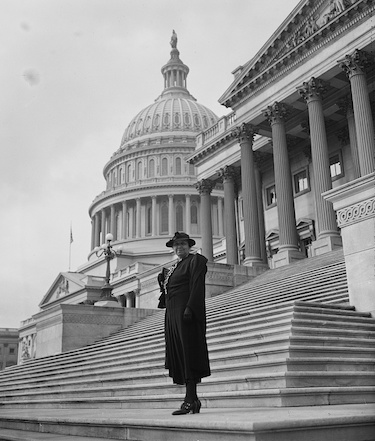
I Was Thinking About…Hattie Caraway
By Andy Lee
Though largely forgotten today, Senator Hattie Caraway made history as the first woman elected to the United States Senate. She overcame daunting odds to win office in 1932 and served Arkansas for over 14 years, championing rural America. Looking back on her remarkable political journey, several aspects of Caraway’s career stand out that illustrate her perseverance and pioneering spirit.
Born Hattie Ophelia Wyatt in rural Bakerville, Tennessee in 1878, Caraway grew up in a modest home, the daughter of a small businessman and homemaker. After marrying Arkansas politician Thaddeus Caraway in 1902, she immersed herself in her husband’s political career while raising three sons. This grassroots education prepared her for public office.
Caraway entered politics by chance after the unexpected death of her husband, Senator Thaddeus Caraway, in 1931. Despite having no political ambitions, local leaders persuaded her to run for her late husband’s vacant seat. This sudden opportunity and sense of obligation to Arkansas voters propelled Caraway into the race.
Few thought Caraway had a chance as an inexperienced widow facing several prominent male opponents. But her reputation as an involved political spouse and her husband’s popularity gave her an edge. She ran on restoring prosperity for rural Arkansas through New Deal aid after the Depression’s ruinous impact. Courting women voters through a grassroots campaign, she pulled off a stunning upset victory that made national headlines.
Suddenly Caraway found herself the first female member of the Senate. Patronizing colleagues and skeptical newspapers initially predicted she would falter. But Caraway refused to conform to expectations that her role was merely symbolic. She immediately got to work mastering legislative process and fighting for constituents struggling economically.
Caraway leveraged her position to deliver aid directly to Arkansas families in need. Local farmers credited New Deal agriculture policies she facilitated with saving their livelihoods and land after extensive storm damage. Parents thanked Caraway for securing funding to build the first rural high school in their remote community. Her advocacy improved daily life across Arkansas.
In 1938, Caraway demonstrated her political skill by winning a full term decisively, this time running on her accomplished Senate record. She defeated the same opponent who had dismissed her six years earlier as a “caretaker” filling a seat. Caraway’s victory confirmed that she was no mere stand-in but could succeed through her own capabilities and vision.
Senator Caraway’s career reveals the perseverance required for women to gain political power in that era. She turned initial reluctance into courageous leadership under glaring national scrutiny. Caraway’s presence reminded lawmakers that government’s duty included bettering ordinary Americans’ lives, not mere political games. Her grit and achievements still inspire elected women serving in her footsteps today.
Stay curious, keep exploring!
 I was thinking about...