
I Was Thinking About…Prohibition
By Andy Lee
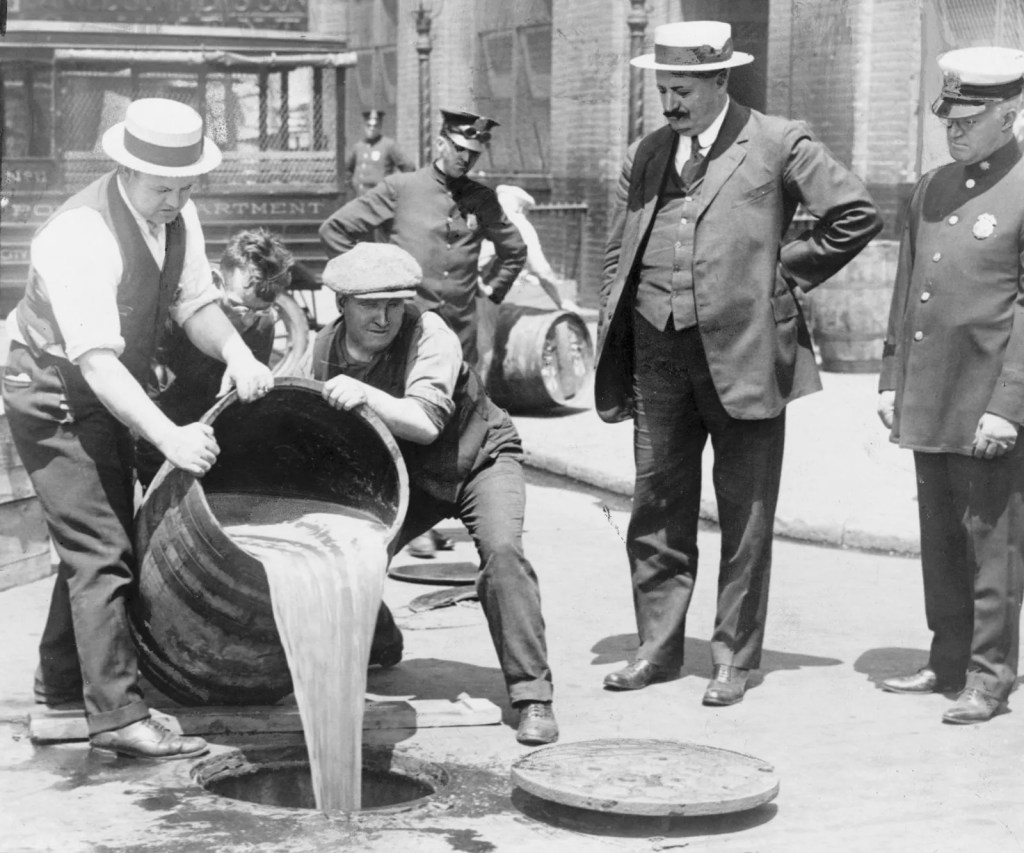
Few eras in modern American history were as fascinating and fraught as Prohibition in the 1920s and early 30s. This period saw a constitutional ban on alcohol manufacturing and sale in the United States from 1920 to 1933. While well-intended as a moral and public health initiative, Prohibition was ultimately a failed social experiment that fundamentally transformed American culture and attitudes. As I read about this peculiar time, several paradoxical aspects stand out to me.
Prohibition was the culmination of a century of activism and political lobbying by the temperance movement. Organizations like the Anti-Saloon League successfully framed alcohol as a dangerous vice that destroyed families, fueled crime, and drained the economy. They painted saloons and distilleries as corrupting forces undermining traditional values. By tapping into powerful societal anxieties, Prohibition advocates achieved the passage of the 18th Amendment instituting nationwide alcohol prohibition.
However, the temperance movement’s sweeping vision for moral reform quickly faced immense challenges and unintended consequences. Initial optimism faded as weak enforcement and loopholes emerged. The federal government lacked resources and coordination between agencies like the Coast Guard and the Bureau of Prohibition to adequately enforce the new law. Bootleggers and rum runners famously supplied a booming underground market for illegal liquor through homebrews, secret distilleries, and smuggling from Canada and the Caribbean.
Organized crime blossomed around this illicit trade, with infamous mobsters like Al Capone amassing power by running vast, violent bootlegging operations. Underground speakeasies flourished, creating a new subculture around forbidden alcohol consumption. Rather than drying out the country as intended, Prohibition normalized casual lawbreaking and made criminals like “Scarface” Capone into folk heroes.
Prohibition also had complicated social impacts. While its advocates envisioned greater sobriety and order, the ’20s saw new public freedoms for women to work, socialize, and date more freely in the unsupervised spaces of speakeasies. The vibrant Jazz Age culture celebrated youthful rebellion and self-expression. Prohibition’s failure highlighted the difficulty of banning private behaviors, even deeply rooted ones.
Economically, the costs of enforcing such an unpopular law drained public coffers. The Great Depression intensified opposition, as legalizing alcohol once again seemed a fiscal necessity. Ultimately a diverse coalition, from religious leaders to the medical community, turned against this “noble experiment” as excessive government overreach.
The 21st Amendment repealing Prohibition was ratified in 1933, ending 14 years of frustrated efforts to ban liquor consumption. In the aftermath, alcohol control returned primarily to state and local authorities. Prohibition’s legacy confirmed the impossibility of totally prohibiting a popular vice through force of law alone. However, it also spurred lasting conversations around issues like substance abuse, regulation of addictive substances, organized crime, and moral reform versus personal liberty.
In many ways, Prohibition’s failure highlighted the perpetual tension in America between individual freedom and community values. However flawed, it sprang from genuine aspirations for a more virtuous society. Its unintended consequences revealed the stubborn endurance of human appetites, ingenuity and leisure pursuits, legally or not. This peculiar period illuminated truths about law, morality and human nature that we wrestle with even today. America’s “noble experiment” was a trial run exposing the limits of legislating virtue that still echoes through our ongoing debates over private behavior and the role of government.
Stay curious, keep exploring!
 I was thinking about...