
I Was Thinking About…Mount Rushmore’s Journey From Idea to Epic Granite Reality
By Andy Lee
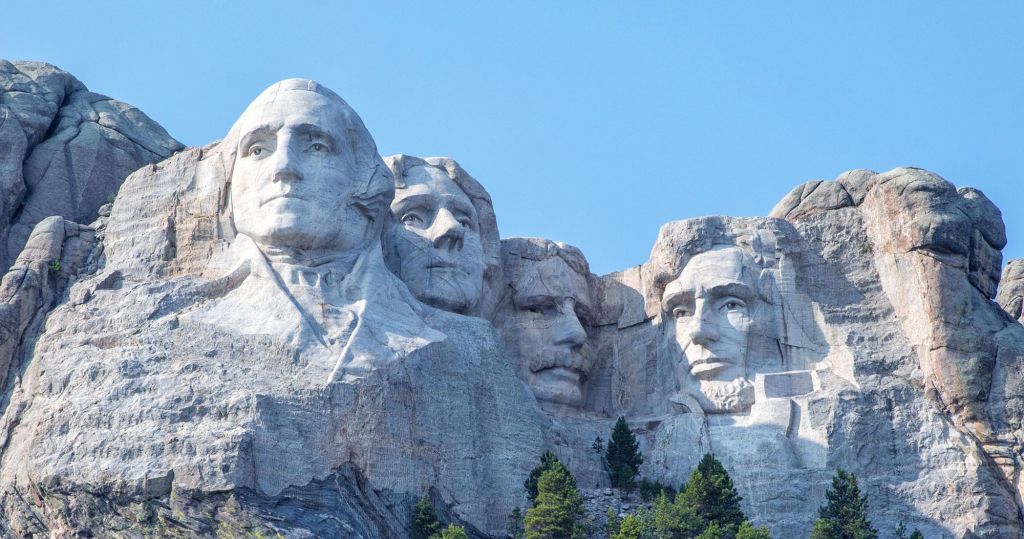
Mount Rushmore, we’ve all seen the imposing 60-foot granite faces of Washington, Jefferson, Roosevelt and Lincoln gazing down from their Black Hills perch. But the ambitious process that brought this massive rock sculpture to life often gets overlooked.
Long before it became a revered landmark, the idea for Mount Rushmore originated with a local historian named Doane Robinson in 1923. To attract tourists, he conceived a monument featuring famous figures from the Wild West. He hired sculptor Gutzon Borglum, who rejected Robinson’s frontier heroes idea, envisioning something grander – carving a true national monument into the Black Hills’ granite.
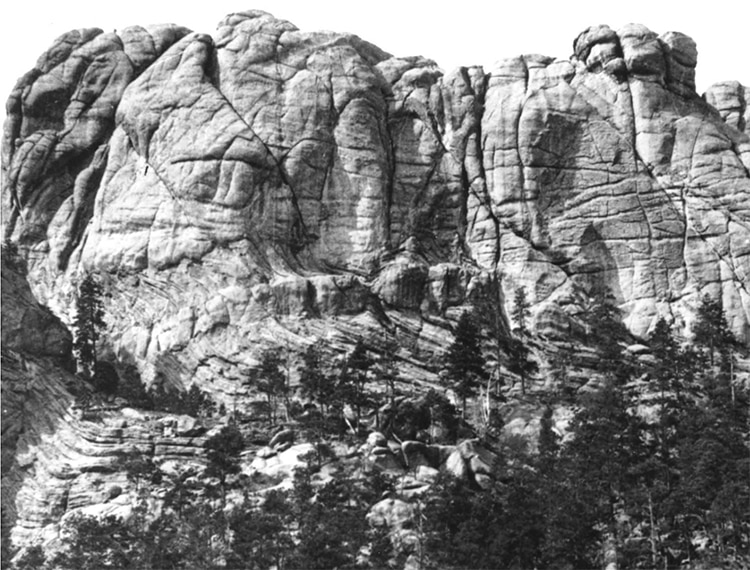
After securing federal funding in 1927 despite initial skepticism, Borglum selected the southeastern face of Mount Rushmore near Keystone, South Dakota for carving. This remote 5,725-foot peak named after a New York lawyer provided ideal exposure and rock quality. But sculpting on such a grand scale posed immense, unprecedented challenges no one had ever tackled before.
Borglum approached the project with reverence, saying, “From this mountain, not one of America’s sons will be absent.” His vision was an epic artistic feat honoring America’s essence in enduring stone. After months of dangerous climbing and calculations, Borglum made his first marks outlining Washington’s features in October 1927. No room for error existed on such an epic canvas!
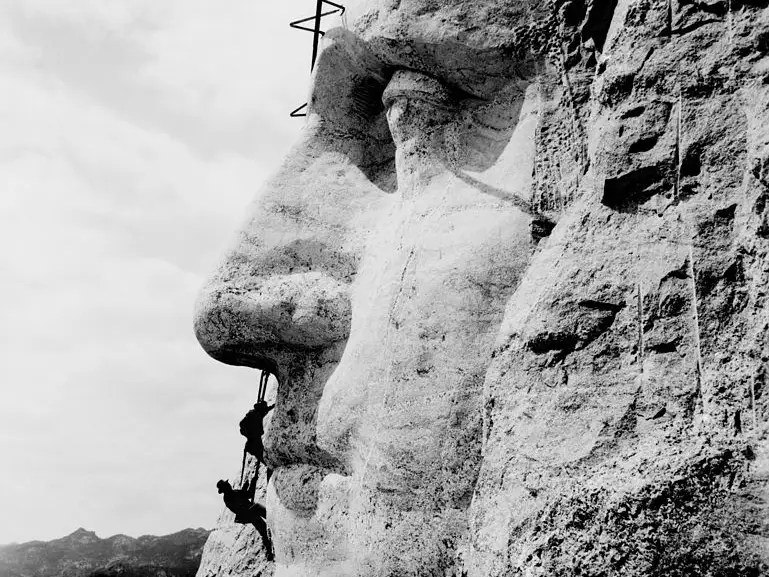
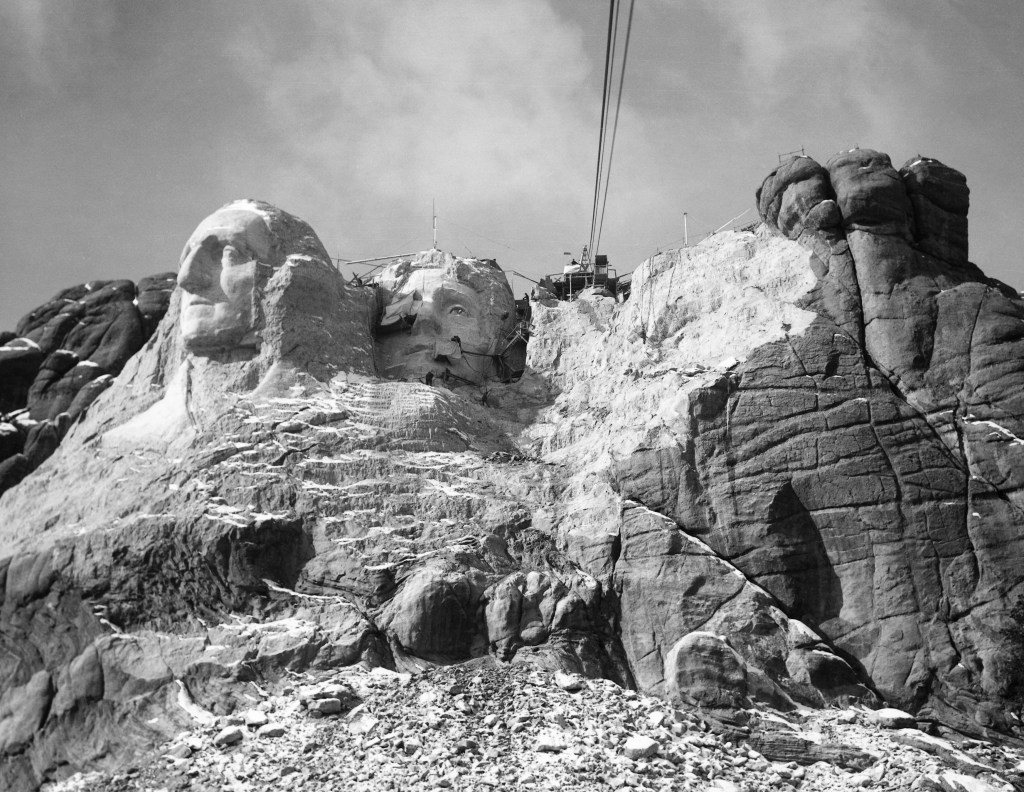
Sculpting required remarkable dexterity and precision. Using careful dynamite blasts, pneumatic jackhammers, and precise hand chiseling, Borglum slowly peeled back the mountain’s skin to reveal the figures inside. His crew erected elaborate scaffolding and rigging to access the ever-growing faces from their brows to their chins.
Carving just Washington’s head alone took over 6 years, finally completed in 1934. Jefferson’s image followed in 1936, with the entire project facing growing skepticism due to Borglum’s plodding pace. But late rallies of public support kept construction funded through the Great Depression’s depths.
After Borglum’s death in 1941, his son Lincoln took over the monumental task, aided by power winches and hoists to remove massive stone debris. Despite material shortages during World War II, Lincoln persevered through doubts, completing Roosevelt in 1936. Finally in October 1941, the majestic 60-foot faces were dedicated with an inscription and Hall of Records vault.
The significance of this American shrine was immediately clear, attracting visitors from across the globe. Each carefully selected President symbolized core US ideals – Washington as nation founder, Jefferson for expanding its promise, Lincoln as uniter, and FDR’s leadership through desperate times. Together they formed an ode to liberty carved into the living rock.
But protecting Mount Rushmore’s grandeur for posterity proved an equally monumental task. Harsh weather, erosion, and nesting birds threatened the sculpture. Starting in 1937, specially trained mountaineers scaled the cliffs annually, securing and cleaning the carved figures. Major restorations in 1998 and 2005 used modern techniques to stabilize cracks and assess repairs needed.
Today, between 2 and 3 million people marvel at the mountainside Presidents each year. But very few consider the incredible human determination required to shape inert stone into enduring symbols inspiring generations. We owe deep admiration and thanks to the workers who devoted years coaxing America’s ideals from Livingston granite.
The true legacy of Mount Rushmore goes far beyond the rock itself. Gutzon Borglum intended the sculpture to represent the “Unfinished Work” of preserving liberty and democracy – work carried on by all who gaze up at it. The figures embody the strength America draws from its icons and history to propel it onward.
So next time you see images of Mount Rushmore or stand before its towering edifices, appreciate the skill and monumental effort embodied in its creation. And reflect on the deeper purpose infused into the rock to uplift our nation. More than motifs carved into a cliff, these stony faces were gifts to the future, destined to inspire ages yet unborn. Their majesty and meaning were dreamed up and brought into reality through years of patient human endeavor.
The intricate artistry and bold vision that birthed Mount Rushmore came not from a mountain’s inspiration, but from a sculptor’s passion.
Stay curious, keep exploring!
 I was thinking about...