
I Was Thinking About…Constructing a New York Landmark
By Andy Lee
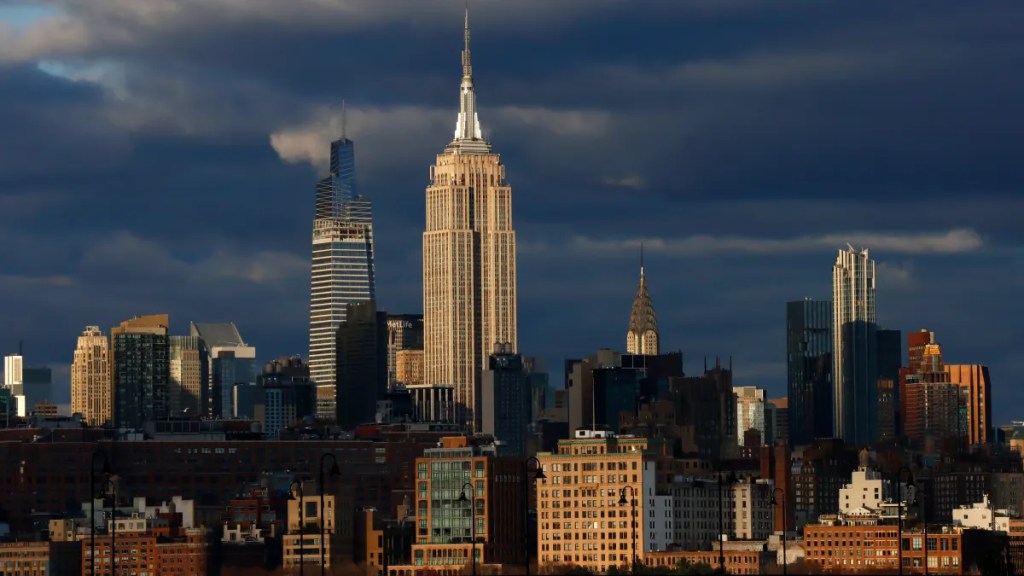
The history of the Empire State Building and how this Art Deco masterpiece came to dominate New York City’s skyline is an interesting story. While today it’s a beloved icon, the behind-the-scenes story of the Empire State Building’s planning and construction is remarkable. As an engineering feat, it was unprecedented for its time.
Construction began on St. Patrick’s Day 1930, as excavators broke ground on the massive skyscraper’s foundation. Visionary businessman John J. Raskob spearheaded the project, partnering with wealthy investors like former New York Governor Al Smith. The historic Waldorf-Astoria hotel occupied the site originally, and was razed to make way.
From the outset, the Empire State Building was designed to be the world’s tallest building upon completion. Architect William F. Lamb charted an ambitious plan for a modern 102-story tower soaring 1,250 feet into the clouds. His pioneering design took inspiration from the 1923 Art Deco thriller movie “The King of Heights.”
A huge workforce mobilized to erect the steel giants. Men known as “connector men” risked their lives assembling beams and girders high above the bustling streets. These fearless ironworkers acknowledged the constant threat of falling with grim humor. Each day could be their last, but the pay incentivized their courage.
In just over a year, crews erected the Empire State Building’s entire steel skeleton, averaging an astonishing four and a half stories completed each week! Special railway tracks brought in materials and removed debris 24/7. The rapid pace was dangerous, but Lathrop’s modular mass-production techniques expedited construction considerably.
Finally, on May 1, 1931, President Herbert Hoover officially opened the completed Empire State Building, declaring it “the greatest peace time enterprise of our time.” The opening ceremony was broadcast across America through a transmitter installed on the towering spire.
For over 40 years, the Empire State Building retained its crown as the world’s tallest skyscraper. Its status as an instant architectural marvel and emblem of ambition was unmatched. Even the Great Depression failed to diminish its soaring majesty above the Manhattan skyline.
Yet behind the sleek Art Deco facade, the activity powering this modern marvel was nonstop. A city within a city, the Empire State Building employed its own sanitation and fire departments, power plant, water tower, and radio transmitter. Its own zip code helped manage over 10,000 tenants and visitors daily.
So next time you’re strolling in midtown Manhattan, gaze up at the Empire State Building and picture the industrious hub within that made building skyward possible. The ambition, ingenuity, and backbreaking labor behind its construction are as monumental as the magnificant skyscraper itself. Its majestic spire will forever stand as a symbol of New York City’s vision and spirit.
Yet for all its splendor, the Empire State Building remains approachable to the public too. Its observation decks offer breathtaking panoramas, its Art Deco details dazzle close-up, and its sheer immensity awes all who stand beneath it. As visionary John Raskob said when planning the project, “I expect the Empire State to be the most famous and most beautiful building in the world.” Eight decades later, it remains just that.
So next time you’re visiting New York, pay homage to the workers who built the world’s most iconic skyline. Look up at their soaring handcrafted towers of stone and steel, conceived through ingenuity and constructed through determination. The Empire State Building epitomizes the relentless spirit that has always pushed Gotham skyward. This magnificent structure stands as a monument to the ambition, effort, and skill that embodies New York.
Stay curious, keep exploring.
 I was thinking about...