
I was thinking about…Buffalo Soldiers: The Overlooked African American Heroes of the Wild West
By Andy Lee
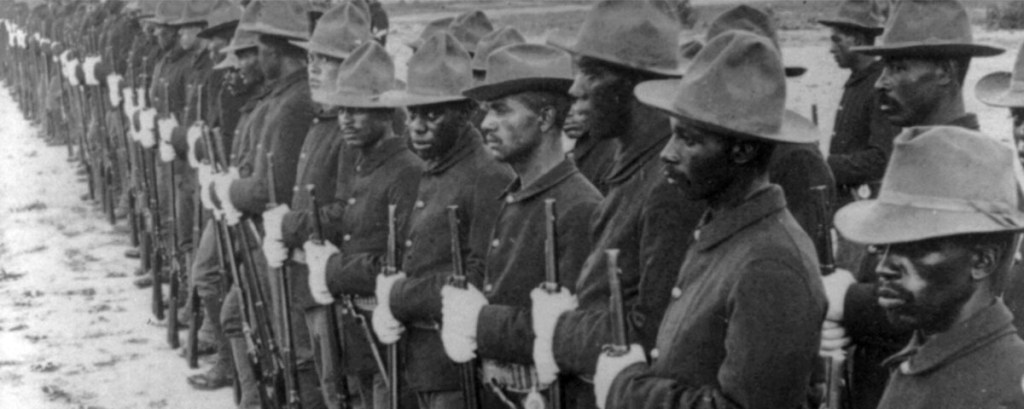
Howdy folks! Recently I’ve been delving into the unheralded stories of some real unsung heroes who shaped the history of the American West – the legendary Buffalo Soldiers. These courageous African American cavalry and infantry regiments served with remarkable distinction on the frontier, fighting pivotal battles, building critical infrastructure, and protecting vulnerable settlements. But their essential contributions have been largely erased from our popular image of the “Wild West.” Well, I think it’s high time we revisit their incredible story.
After the Civil War, Congress authorized the creation of six segregated army units for African American recruits, including the 9th and 10th Cavalries and the 24th and 25th Infantries. The Cheyenne had bestowed them the name “Buffalo Soldiers,” out of respect for their tenacious fighting spirit and resolute bravery against daunting odds – like buffalo confronting a storm.
From remote outposts at forts like Robinson, Davis, and Huachuca, the United States Army dispatched the Buffalo Soldiers regiments to some of the most desolate, punishing terrain out West. They battled Native American tribes like the Cheyenne, Comanche and Apache who resisted resettlement treaties. Troopers escorted vulnerable wagon trains, mail coaches, prospectors, and railroad crews through treacherous territory, guarding them from ambush. They also protected early pioneering settlers and emerging towns who were easy prey for raids.
One soldier named John Randall recounted escorting a group of surveyors mapping out western Arizona. His patrol warily watched for ambushes daily and barely slept at night. Randall wrote his family, “This sure is a rough land, and rough work, but we signed up for it.” This kind of hazardous duty defending civilians and taming the frontier exemplified the Buffalo Soldier experience.
Despite rampant discrimination, poor supplies, and remote deployments, the regiments established a stellar combat record. The Buffalo Soldiers played pivotal roles in key campaigns like the Texas Indian Wars, Apache Wars, and Spanish American War. Their resolute cavalry charges and daring raids helped subdue some of the last defiant chiefs like Victorio and Geronimo. But press accounts often conveniently ignored their contributions, preferring to praise the exploits of white regiments instead.
Aside from battlefield action, the Buffalo Soldiers provided the critical infrastructure that helped open up large swaths of the West. They strung hundreds of miles of telegraph lines across hostile territory, enabling transcontinental communication for the first time. The troops improved local roads, bridges, and mountain trails that made travel safer for wagons, stagecoaches, railroads and settlers. Members even served as some of the country’s first park rangers, patrolling the backcountry of Yosemite and Sequoia National Parks.
Contrary to typical portrayals of the Indian Wars, the Buffalo Soldiers enjoyed some positive relations with Native peoples as well. Their regimental bands enthralled local tribes when they performed a unique syncopated style and added creative bugle calls learned from the cavalry. Shared hardships on long scouting treks into the wilderness sometimes led to unlikely camaraderie between troops and warriors. And Native groups deeply respected the Buffalo Soldiers’ grit and audacity in battle.
By the early 20th century, the storied Buffalo Soldiers regiments had compiled one of the most distinguished records of service in the entire U.S. Army. Between 1866 and 1918, 18 members had earned the Medal of Honor for heroism. But with the First World War, the units were finally disbanded and integrated as the Army was desegregated. Only their distinctive crest endures today.
Clearly, the Buffalo Soldiers’ story challenges the familiar Hollywood version of the Wild West. But we should remember their indispensable role in frontier security, infrastructure expansion, and exploration. Their courage and sacrifice in the face of institutional prejudice speaks to the highest ideals and traditions of the U.S. armed forces. Whether protecting wagon trains, building telegraphs, or serving in battle, their legacy is deeply rooted in the history of the American West.
So next time you think of those wide-open sagebrush plains and painted sunsets over the mesas, take a moment to remember the Buffalo Soldiers. Their overlooked story is one of faithfully serving a nation that did not yet fully accept them. But the diversity and merit they represented was ahead of its time, and aligns with our values today. Their martial legacy in the wilderness truly epitomized the frontier spirit.
Stay curious, keep exploring.
To learn more, check out these great resources:
National Park Service: https://www.nps.gov/prsf/learn/historyculture/buffalo-soldiers.htm Smithsonian: https://www.si.edu/spotlight/buffalo-soldiers U.S. Army: https://www.army.mil/buffalo/“
 I was thinking about...