
I was thinking about…The Fire that Made Chicago into a Titan After 1871 Inferno a Resilient City Emerged
By Andy Lee
Chicago is known today as one of America’s greatest cities, an international hub of culture, commerce, sports and more. But back in 1871, the future was uncertain after a massive fire devastated Chicago, destroying thousands of buildings and leaving over 100,000 residents homeless. As a history lover, I wanted to dive into the story of the Great Chicago Fire. This inferno raged from October 8-10, 1871, burning over 3 square miles of the city. Yet from the smoldering ashes, Chicago was reborn even stronger – a powerful demonstration of the resolute Midwestern spirit.
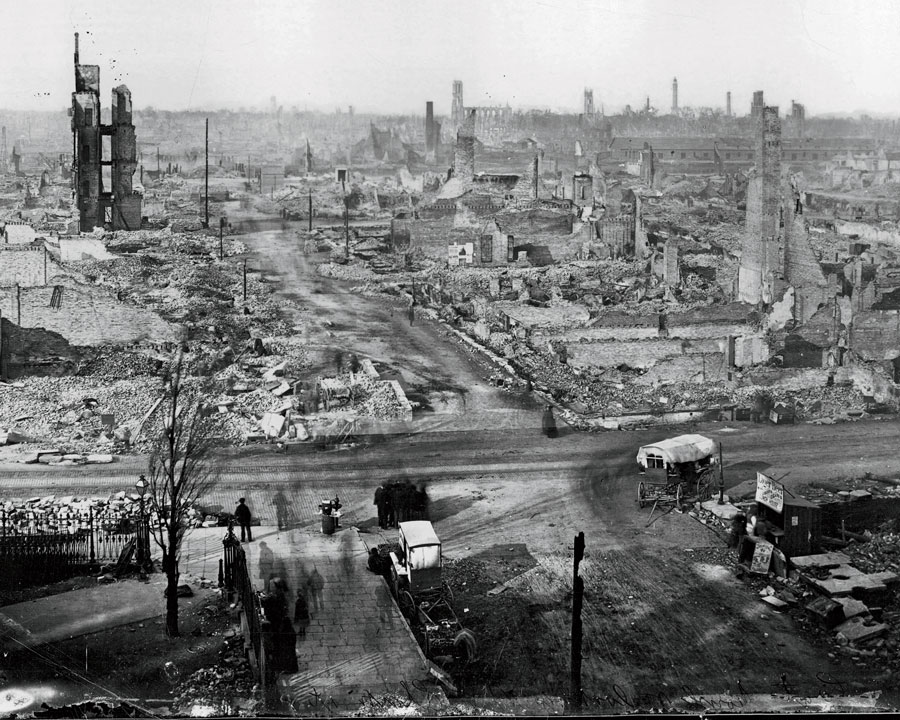
Folks, the damage from the fire was staggering. Around 17,500 structures were destroyed, including homes, factories, stores, and offices. Famed landmarks like the Court House, City Hall, and many churches were reduced to cinders. The business district was left in ruins. Railroad tracks warped from the extreme heat. Debris and rubble littered the streets. And with over 98,500 people displaced by the flames, Chicago faced immense loss of jobs, infrastructure, and resources.
Several factors allowed the fire to spread rapidly and cause such damage. Hot, dry weather combined with strong winds created the perfect conditions for combustion. Most buildings were made of wood, allowing flames to engulf entire blocks quickly. Lack of an established firefighting force worsened destruction as exhausted firefighters battled the blaze for days. To this day, the exact cause is unknown – theories range from a lantern in a barn to a meteor strike! But whatever sparked the first flames, the firestorm grew into an inferno rapidly devouring Chicago.
As word of Chicago’s devastation spread worldwide, people feared the young city’s future was doomed. The population had exploded from just 4,000 to 300,000 between 1840 and 1870 as Chicago became a booming railroad and manufacturing hub. Many assumed the fire would reverse this meteoric growth. But Chicagoans rallied together undaunted to rebuild their city from the ground up even better than before.
In the aftermath, the city witnessed great determination and unity. People from all classes worked side by side to clear debris and construct new buildings. Citizens diligently rebuilt railroads, homes, businesses, and critical infrastructure with remarkable speed. Architects like William LeBaron Jenney ingeniously designed new “fireproof” buildings using steel and concrete, pioneering techniques that became standards nationwide. Constant construction noise resounded as the city rose rapidly from the ashes like a phoenix.
Just 20 years later, Chicago hosted the renowned 1893 World’s Fair. This international exhibition showcased the city’s magnificent rebirth through groundbreaking architecture, culture, technology, and design that awed visitors worldwide. By 1890, Chicago’s population had soared to over one million as the city diversified into an industrial and transportation powerhouse boasting modern skyscrapers, universities, cultural institutions and more. The indomitable, optimistic spirit that emerged after the fire paved the way for Chicago to transform into a global metropolis.
The Great Chicago Fire could have doomed the city’s future. Instead, it unleashed unity, resolve, and innovation that allowed Chicago to leap dramatically forward. Sophisticated urban planning and regulations emerged from the ashes as Chicago became the birthplace of steel construction that transformed building worldwide. Today, the city’s seal bears the inspirational motto “Urbs in Horto” – Latin for “City in a Garden.” This reflects the green parks, boulevards and public spaces that were integral to Chicago’s rebirth.
So, whenever you walk Chicago’s vibrant streets today, remember that over 150 years ago much of this was scorched earth after devastation few cities could have survived. But Chicagoans came together and resolutely declared they would rebuild. That steadfast Midwestern spirit turned destruction into an opportunity to learn and emerge stronger. The story of Chicago’s rise from the ashes remains an inspiring testament to human resilience, imagination, and community. It’s a pivotal moment in history that transformed disaster into progress.
Well, that’s my attempt to briefly recap the extraordinary tale of Chicago’s fiery destruction and profound renewal. The ways everyday citizens banded together to reconstruct something even greater captures the determination and vision of the American spirit at its finest. Let me know if you want me to explore the history behind any other cities forged and tempered by tragedy and triumph!
Stay curious, keep exploring.
 I was thinking about...