
I was thinking about… New Orleans, Where Jazz Was Born and Still Lives
By Andy Lee
As a history enthusiast, I wanted to fully explore the origins of how New Orleans became the birthplace of jazz music. As a genre, jazz is considered one of America’s great musical contributions to the world. But how exactly did this lively city blend together the right ingredients to give birth to an entirely new style of music?
As a bustling port town founded in 1718 under French rule, New Orleans had absorbed diverse influences from France, Spain, Africa, the Caribbean and beyond by the late 1800s. The city sat at the mouth of the great Mississippi River, allowing a constant flow of goods, people, and musical ideas from foreign shores and inland areas. This melting pot environment allowed New Orleans to brew up new sounds.
By the late 19th century, African American musicians drawing on diverse musical traditions began pioneering and blending together different elements to create the embryonic sounds of jazz. Brass and wind instruments popular in European military bands were combined with African percussion traditions, Caribbean rhythms, African American gospel, spirituals, work songs and Delta blues. Improvisation and syncopation were also woven into the mix. These rich ingredients slowly simmered together within distinct New Orleans neighborhoods in the late 1800s and early 1900s to produce something new.
In Storyville, the famed red-light district, early ragtime piano and jazzy proto-blues bands played in the saloons and brothels to entertain clients. Congo Square, today part of Louis Armstrong Park, had long hosted gatherings of enslaved Africans on Sundays to sing, dance play traditional music on handmade drums and stringed instruments like the banjo. Uptown in neighborhoods like Central City, an emerging class of Creole musicians was also creating a new sound that fused European classical training and technique with African rhythmic syncopation and improvisational vocal traditions. Downtown in the French Quarter, brass bands and ensembles absorbed European marches, waltzes and classical arrangements while adding a New Orleans twist.
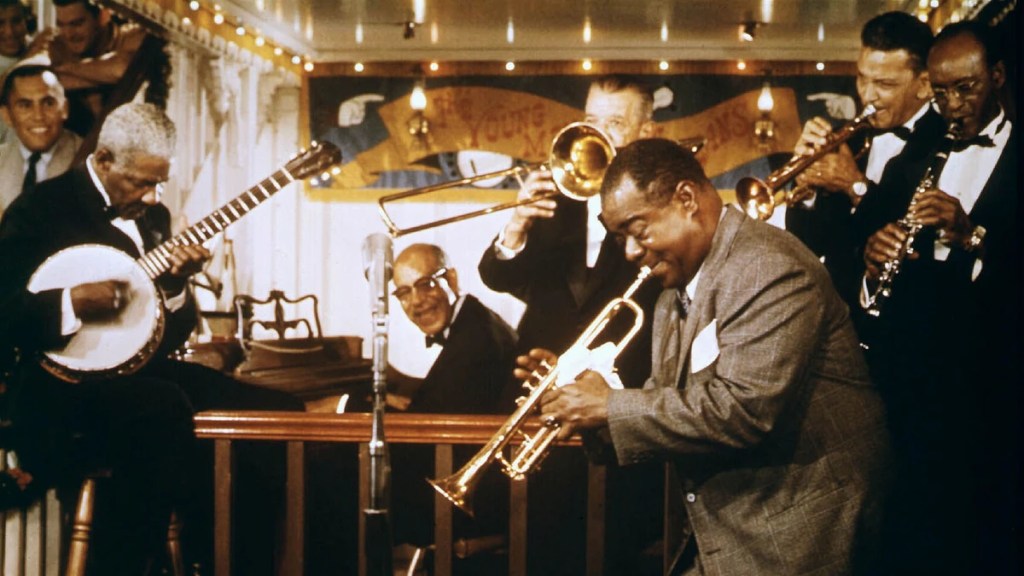
As jazz began to percolate in pots across New Orleans, traveling bands on steamboats helped spread the new genre up and down the Mississippi River, allowing the music to reach wider audiences. Soon, New Orleans birthed legendary jazz pioneers like Buddy Bolden, Jelly Roll Morton, Sidney Bechet, and Louis Armstrong. Their innovations expanded and spread improvisational soloing and helped evolve the bluesy sound from early ragtime into full-fledged swing, Dixieland jazz, and more. While jazz certainly evolved over the decades and absorbed influences from other cities, it remained closely connected to its birthplace of New Orleans. To this day, New Orleans funerals feature somber brass band parades playing dirges and hymns to honor deceased musicians on the route to the cemetery. This tradition traces back over a century to jazz’s roots. Classic New Orleans jazz still retains much of that original sound first brewed up in the city’s streets long ago.
New Orleans’ location at the mouth of the mighty Mississippi proved key, allowing it to export jazz nationwide via steamboats in the late 1800s and recording technology in the early 1900s. As jazz floated up the Mississippi’s waters or spread on records, new jazz hotspots sprouted in Chicago, New York, Kansas City, Los Angeles and beyond. Yet even as it evolved into new styles like big band, bebop, cool jazz, and fusion, the genre remained firmly anchored to its origins in the Crescent City. Visionary hometown musicians like Louis Armstrong and Sidney Bechet continued shaping jazz worldwide, but always with a New Orleans accent.
When examining its history, old New Orleans offered the ideal musical melting pot environment for jazz to emerge. The collision of diverse rhythms, instruments, and influences from Africa, the Caribbean, Europe, and beyond all blending within a cosmopolitan city known for celebrating spontaneity, individual freedoms, and good times provided the perfect storm for jazz to bubble up and forever change music. The spontaneous creativity at jazz’s heart reflected the soul of New Orleans itself. This new genre simply could not have been born anywhere else but the eclectic musical gumbo pot that was 19th century New Orleans.
Today, jazz continues evolving as new artists put their creative spin on traditions old and new. But New Orleans still retains echoes of that original sound in its cozy jazz clubs, massive festival jam sessions, and late-night street parades. Take a stroll down Frenchman Street, and you may hear the playful trumpet of Louis Armstrong or a Buddy Bolden cornet solo drifting by. Though jazz has beautifully branched out and bloomed worldwide, its roots remain firmly planted in the New Orleans soil where diverse influences collided to hatch America’s greatest musical gift to the global stage. The story of how one remarkable city gave birth to an entire genre remains as richly fascinating as jazz itself.
Let me know if you would like me to dive into the origins of any other unique American musical styles, genres, or cities that gave birth to new sounds. As a history buff, I enjoy learning about how our country’s diverse musical melting pot came to be. The way cities and cultures collided to create something entirely new is an important legacy.
Stay curious, keep exploring.
 I was thinking about...