
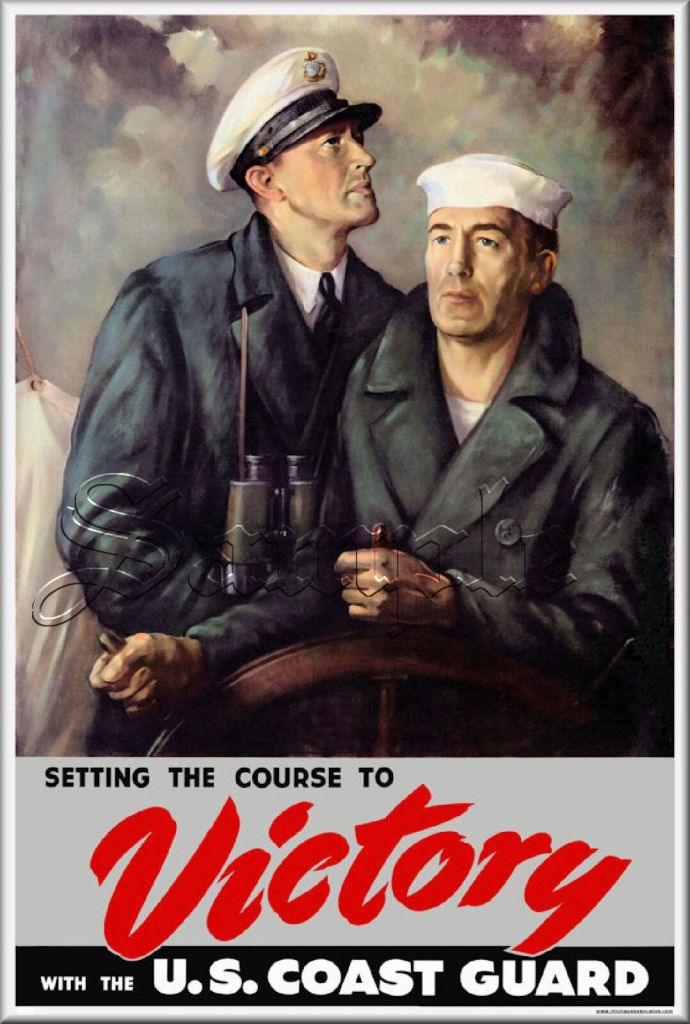
I was thinking about…The Coast Guard’s Crucial Role in WWII
By Andy Lee
As I was reading about World War II history recently, I realized just how little attention is given to the United States Coast Guard’s critical involvement. Though they tend to be overshadowed by higher-profile military branches, the oft-forgotten Coast Guard served indispensable functions across naval theaters worldwide. Their steadfast commitment was a driving force behind Allied victory.
Tracing its origins to 1790 as the Revenue Cutter Service, the Coast Guard’s primary duties were centered on maritime law enforcement and security. But by WWII, their responsibilities had expanded extensively, including coastal defense, troop transport, and special operations. Placed under Navy operational control, the Coast Guard leveraged their versatile skillsets to meet the challenges of global warfare, while still retaining their distinct identity.
No matter the mission, they confronted the call of duty with courage, tenacity, and unwavering resolve. As the “unseen guardians,” they fought along fierce frontlines and patrolled lonely seas, driven by duty and sacrifice. Their efforts merit wider recognition among the pantheon of WWII heroes.
After Pearl Harbor, Coast Guard units swiftly transitioned to a wartime footing at strategic ports nationwide. Diligent coastline patrols and harbor security operations deterred Axis infiltration along vulnerable shores. Coast Guardsmen manned observation and communication outposts, scrutinizing approaching vessels. Their early warning role interlinked coastal defenses against aerial, naval, or amphibious attack.
Inspections of departing merchant ships ensured no enemy agents or explosives stowed away. The Coast Guard also mobilized experienced civilian mariners as temporary reservists through the Coast Guard Auxiliary to multiply shoreside patrols and watches. This comprehensive coastal vigilance shielded the homeland from harm.
In the hazardous Atlantic and Pacific shipping lanes, Coast Guard cutters shepherded tens of thousands of Allied merchant vessels in convoys delivering vital cargoes. While escorting up to 150 ships at a time, they confronted an onslaught of German U-boats, planes, and surface raiders. By war’s end, Coast Guard vessels had battled enemy submarines from Greenland to Brazil, sinking several in fierce skirmishes. Their vigilance minimized maritime casualties, allowing the steady flow of supplies and reinforcements to far-flung campaigns.
The Coast Guard also dispatched sturdy icebreakers to carve paths through frigid Arctic waters for supply ships bound for Russia. Battling bone-chilling cold and constant darkness, these ships kept lifesaving Lend-Lease cargoes flowing to America’s beleaguered ally. Without them, entire offensives might have stalled.
During the Allied invasions of North Africa, Italy, and Normandy, Coast Guard-manned transports and landing ships spearheaded assaults on heavily defended beaches. They unleashed barrage after barrage from artillery guns during the chaotic landings while wave after wave of troops stormed ashore. Coast Guard coxswains skillfully maneuvered landing craft through intense fire to deposit forces on the beaches.
Coast Guard vessels also served as command ships for invasion flotilla commanders, leading the armadas towards their objectives with bullhorns bellowing. Their logistical support and operational control were crucial for spearheading massive amphibious operations against Axis citadels.
Compassion matched the Coast Guard’s combat contributions. They rescued over 1,500 men from stricken ships, including downed pilots plucked from the roiling seas. After convoys faced withering U-boat ambushes, Coasties hauled hundreds of oil-drenched survivors aboard.
One of the most daring rescues was led by Coast Guardsman Douglas Munro, who courageously evacuated a battalion of Marines pinned down on Guadalcanal, posthumously earning the Medal of Honor. This valor in answering the call embodies the service’s ethos.
We Remember
By 1945, the Coast Guard had expanded five-fold, boasting over 241,000 personnel through bolstered enlistment and Women’s Reserve integration. They amassed over 3.5 million miles patrolled, living up to their motto: Semper Paratus – Always Ready. Their indispensable contributions spanned from the lonely Atlantic to the distant Pacific islands.
As we reflect on World War II, we must not overlook the intrepid mariners of the Coast Guard who served as freedom’s first shield. Their legacy inspires the service still today. The “unseen guardians” deserve their rightful place among the frontline heroes who secured victory against tyranny.
Stay curious, keep exploring.
 I was thinking about...