
I was thinking about…An Incredible Journey of Survival Against All Odds
By Andy Lee
I recently found myself intrigued after stumbling upon the astonishing real-life story of the whaleship Essex during research for topics to write about. This unsettling 19th century account of tragedy, desperation and almost unbelievable endurance continues to mesmerize those who dive into its details. It’s a riveting tale of survival against unimaginable odds that forces us to confront the extremes of human nature.
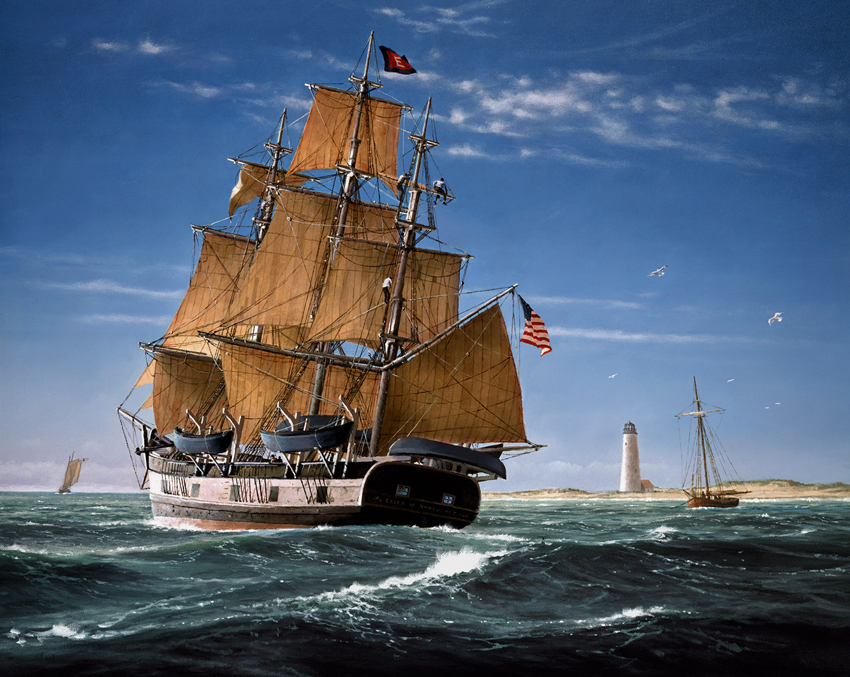
The Essex began its routine whaling voyage when it embarked from Nantucket, Massachusetts in 1819 under the command of Captain George Pollard Jr. Along with a crew of 19 men, the ship set out to hunt sperm whales, intending to extract the valuable oil that made whaling so profitable at the time.
But the journey took a nightmarish turn in November 1820 when a massive85-foot whale violently rammed and sank the ship in the middle of the Pacific Ocean, thousands of miles from land. With the Essex destroyed, the crew abruptly found themselves stranded on three small whaleboats, alone in the vast open ocean.
As their supplies dwindled, the men made the desperate decision to sail over 2,500 miles to South America in what seemed an impossible journey for their tiny boats. Week after week brought new hardships, including storms, blistering heat, and eventually, starvation. Driven mad by hunger, some resorted to cannibalism in order to survive. It was a descent into pure misery and the darkest parts of human nature.
After more than 3 months adrift at sea, only 8 skeletal survivors reached South America to tell the horrific tale. The story became legendary as one of the most chilling accounts of survival ever recorded.
When sole crew member Thomas Nickerson finally shared the full saga years later, the public could scarcely believe men could endure such an ordeal. Many dismissed it as fiction. The depths of suffering described were too shocking to be real. But truth proved more astounding than myth.
While the grim details horrify us, the journey also reveals the extraordinary resilience and perseverance of the human spirit. The men of the Essex refused to give up, even when all hope seemed lost. Their will to keep fighting, mile after excruciating mile, serves as powerful evidence of the human potential to overcome even the most formidable adversity.
The tale inspired Herman Melville’s literary classic Moby Dick. But at its core, this is a timeless story that forces reflection on the human condition. It probes uncomfortable questions about morality, leadership, and our primal drive to survive. Like Captain Pollard and his crew, we all face periods of uncertainty and adversity. Essex reminds us that even in the bleakest circumstances, hope persists. There are depths we can plunge to and still surface from.
The story prompts appreciation for the travelers and explorers lost to history, who ventured into the unknown driven by an adventurous spirit. Though we may never hear all their names, these courageous souls revealed the enduring power of human ambition and perseverance. They set sail into seas of chaos, transformed by the journey.
While thrilling to read about from my desk, I actually enjoy the spirit of adventure itself – perhaps sans the cannibalism! Unlike the mariners of old, I’m thankful to have modern navigation tools and safety systems to assist should any of my own daring travels go awry. Though dangerous waters still harbor risks, technology offers a reassuring lifeline the brave men of the Essex lacked so long ago. I can embark on exciting voyages, pushing my own limits, while retaining access to supports they never had. The call of the unknown tugs at my soul too!
But immense respect goes to those bold mariners who took tremendous risks expanding human knowledge. The riveting account of Essex stands as a timeless tale of the human capacity to overcome and carry on against inconceivable odds. It whispers that we, too, have reservoirs of strength and resilience yet to be tapped.
Stay curious, keep exploring.
 I was thinking about...