
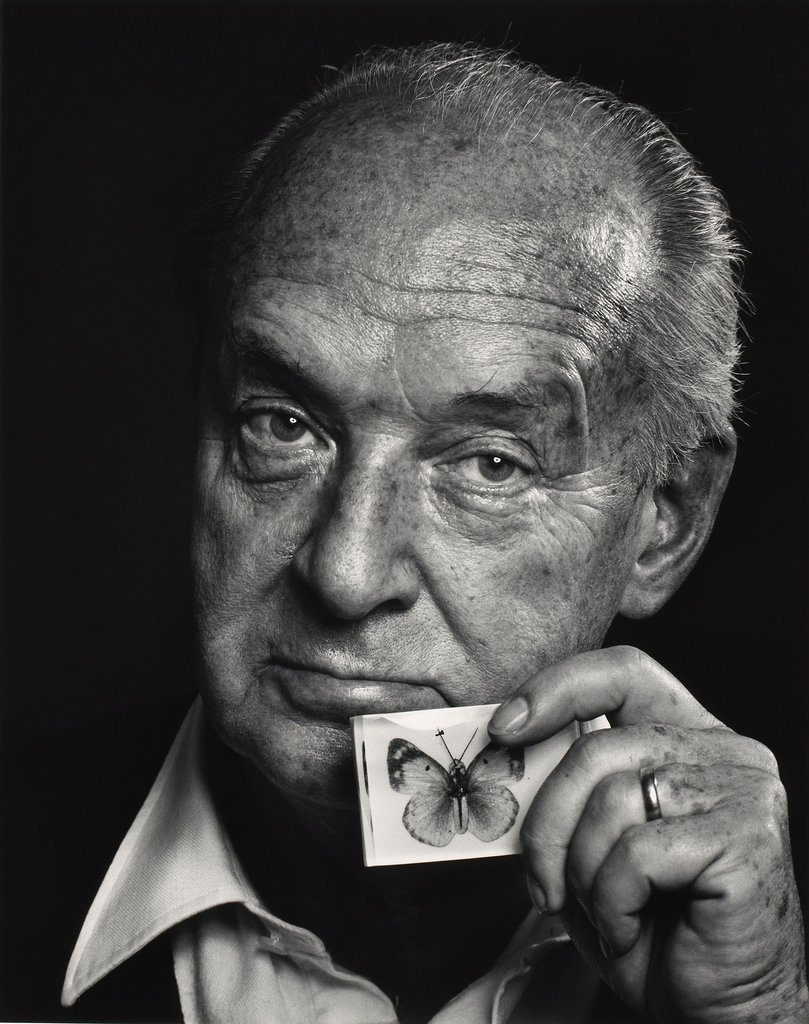
I was thinking about… Vladimir Nabokov, the literary legend’s little-known passion for chasing winged wonders.
His seminal works like “Lolita” and “Pale Fire” tower as monuments of 20th century literature. But few realize Vladimir Nabokov’s most ardent love was not solely reserved for the written word. Beyond his canonical books, he was also a devoted lepidopterist who tirelessly chased the enchantment of butterflies across continents.
From his childhood in Russia spent sketching new species found in the countryside, to his prolific academic writings on butterfly morphology in later years, Nabokov was far more than just an esteemed novelist. He was a man spellbound by the natural world, who saw its most delicate and ephemeral inhabitants – butterflies – as the ultimate embodiments of beauty.
Born in St. Petersburg in 1899 to an eminent family, Nabokov’s interest in butterflies took flight early on. As a boy, he would fill notebooks with meticulous observations, stunned by the geometric perfection of wings and the powdery dust that came off on his fingers when handling them. Local forests became his laboratories.
Even after his family fled Russia and the publication of his first writings in the 1920s, Nabokov never relinquished his childhood passion. While crafting layered literary worlds like the imaginary Zembla of “Pale Fire,” he continued travelling the Americas seeking out new butterfly specimens to study, catalogue, and publish on.
His scientific endeavors were no mere hobby. Nabokov became a respected figure among American lepidopterists, naming multiple new species and pioneering classification techniques. His lepidoptery collection ultimately grew to contain over 10,000 specimens, taking up entire rooms.
What drove this esteemed author to dedicate so much time to cataloging butterflies alongside penning great novels? For Nabokov, butterflies represented Nature’s most exquisite artistic creations – living artworks whose splendor deserved preservation, but which faded all too quickly. Like capturing beauty in poetry, preserving butterflies was for him an act of veneration.
Nabokov also saw analogies between these winged wonders and cherished moments in our lives. “Let other pens seek justice and truth,” he remarked in an interview. “I will seek the enchantment of the past.” This mindset rang through his literature’s lyrical style and inspired his conservation efforts.
Even after finding fame, Nabokov’s dedication never wavered. He wrote passionately against butterfly collection for simple decoration or pleasure. And despite his literary achievements, he called his butterfly drawings his real “masterpieces.”
Late in life while living in Switzerland, Nabokov still arose daily before dawn to study specimens using his microscope and track new species in the Alps. When asked why he didn’t just relax and enjoy his status, he responded: “When I cannot look at a butterfly’s wing without hearing the rush of blood in my ears, I will give up butterfly hunting.” That day never came.
So, let’s remember the literary master not just for his visionary books, but for the vision that allowed him to glimpse heavenly beauty in the wings of a butterfly. Vladimir Nabokov ultimately left two legacies – flawless novels and thousands of specimens preserved for posterity. Both remind us that sometimes the most exquisite treasures take ephemeral forms, whether words or insects.
These thoughts are just the tip of the iceberg! Dive deeper into a world of fascinating stories with my book, ‘I Was Thinking About…’
I Was Thinking About… https://a.co/d/f3h3ro1
 I was thinking about...