
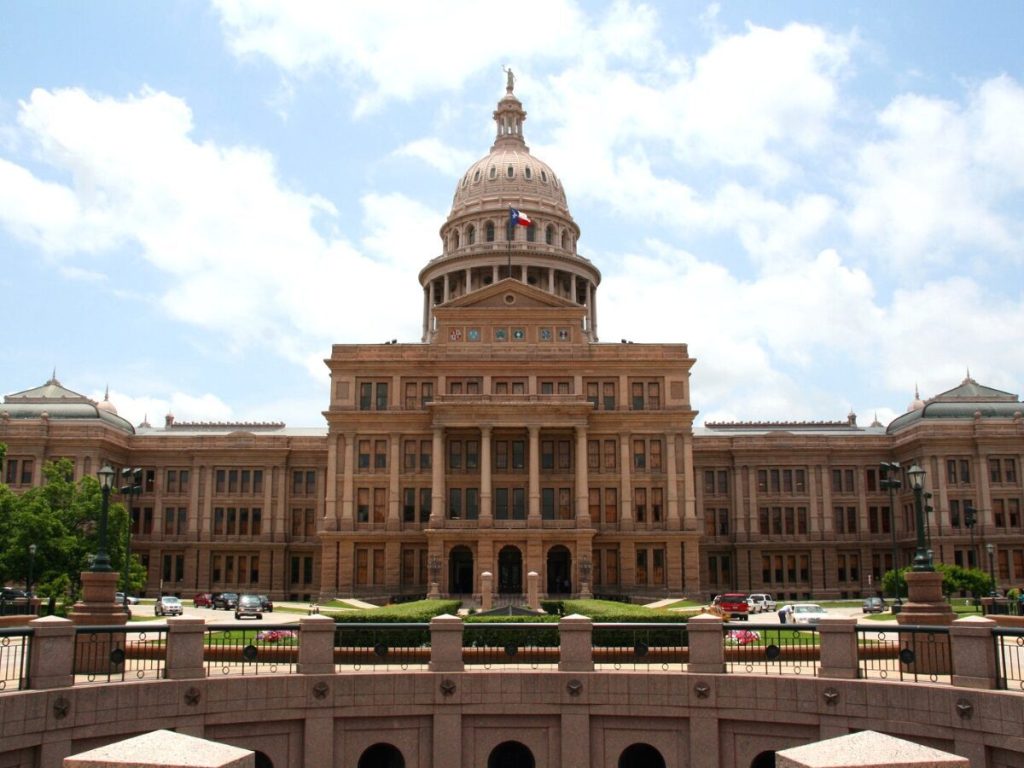
I was thinking about…The Wild and Wacky History of the Texas Capitol Building
By Andy Lee
Hello friends! I hope this post finds you all well. Today, I was thinking about architecture, specifically, about one iconic building that has piqued my curiosity. It’s none other than the Texas Capitol building. You might be thinking, what’s so wacky about a state capitol building? Well, sit back, grab a coffee or tea, and let me take you on a wild ride through the history of this magnificent structure.
The Texas Capitol building, located in Austin, was completed in 1888. But let’s roll back a bit to the genesis of this tale. In the early 1880s, Texas was a young, bustling state with an economy heavily reliant on the cattle industry. However, they had a problem: the existing capitol building had been destroyed by a fire. So, the state government decided to construct a new one, and thus began the journey of the Texas Capitol building we know today.
The way this project was financed is where our story takes its first eccentric turn. Instead of shelling out cash, the Texas government made a deal known as the Capitol Syndicate. They bartered three million acres of public land in the Texas Panhandle, which eventually became the famed XIT Ranch, in exchange for the building of the Capitol. Yup, you heard that right – they traded land for a building, the biggest barter in history!
It gets even more interesting when we look at the construction. Texas wanted their Capitol building to rival the U.S. Capitol in splendor, so they chose a type of pink granite, locally sourced from Granite Mountain. But there was an unexpected challenge: getting the stone from the quarry to the construction site was no small feat. They ended up building a 22-mile-long private rail line just to transport the stone! Talk about determination and Texas grit.
Then there’s the architect. Elijah E. Myers, the man behind the design, had never set foot in Texas before he got the job! Myers had previously designed the state capitols of Michigan and Colorado, and he was chosen because his proposed design for the Texas Capitol was grand, distinctive, and embraced the Renaissance Revival style.
But it’s not all about the past; the Capitol’s history has continued to unfold in quirky ways. It has its share of unique trivia too. For instance, did you know it’s taller than the U.S. Capitol building? Standing proud at 302.64 feet (15 feet taller than the U.S. Capitol), the Texas Capitol is the sixth tallest state capitol, and it’s certainly the biggest in gross square footage of all state legislative buildings.
The presence of the Capitol on Austin’s skyline has been deemed so important that its visibility from certain viewpoints is protected by city and state law. As buildings grew taller in the mid-20th century, Austinites realized that the dome’s visibility was under threat. In 1983, legislators passed a bill establishing 30 protected “Capitol View Corridors” ranging in length from 1,700 feet to over five miles. Within these corridors, the height of new construction is strictly limited in order to protect views of the Capitol dome. While these corridors have at times been a source of frustration for developers, the views they protect form a significant part of Austin’s landscape, and their protection represents a unique recognition of architecture’s role in our shared cultural heritage.
Furthermore, the building has a ghost story or two up its sleeve. The most famous ghost is believed to be the spirit of Comptroller Robert Marshall Love, who died in his office. Late-night workers have reported hearing strange sounds and feeling inexplicable cold spots. Spooky, right?
So, there you have it, folks! From land bartering and construction challenges to potentially haunted halls, the history of the Texas Capitol building is indeed wild and wacky. It goes to show that beneath the facades of seemingly ordinary structures, there can lie a world of fascinating tales.
So, the next time you visit a new place or even walk around your hometown, take a closer look at the buildings. They might just have a story to tell. Until next time, stay curious, friends!
 I was thinking about...