
I was thinking about…How Martin Luther King Jr. Fought for Workers’ Rights
By Andy Lee
Hey there, folks! Today, I invite you to journey back in time with me to the historic Memphis Sanitation Strike of 1968—a pivotal moment in the ongoing struggle for civil rights and workers’ rights in America. So, grab a comfy chair, a warm cup of your favorite beverage, and get ready to immerse yourself in the inspiring story of Dr. Martin Luther King Jr. and the unwavering workers who fought for justice.
Imagine the city of Memphis in the late 1960s, a vibrant hub of cultural diversity and economic growth. But beneath the surface, a deep-rooted problem plagued the city—the deplorable working conditions and discrimination faced by the sanitation workers, predominantly African American, employed by the city. These brave individuals, members of the American Federation of State, County, and Municipal Employees (AFSCME) Local 1733, decided they had endured enough and took a courageous step by going on strike on February 12, 1968.
As news of the strike spread, it reached the ears of Dr. Martin Luther King Jr., a prominent leader in the civil rights movement. Recognizing the urgent need to stand in solidarity with the workers and address the intertwined issues of racial and economic inequality, Dr. King immediately made his way to Memphis. His arrival injected new energy into the strike and galvanized the workers, who had long been overlooked and mistreated.
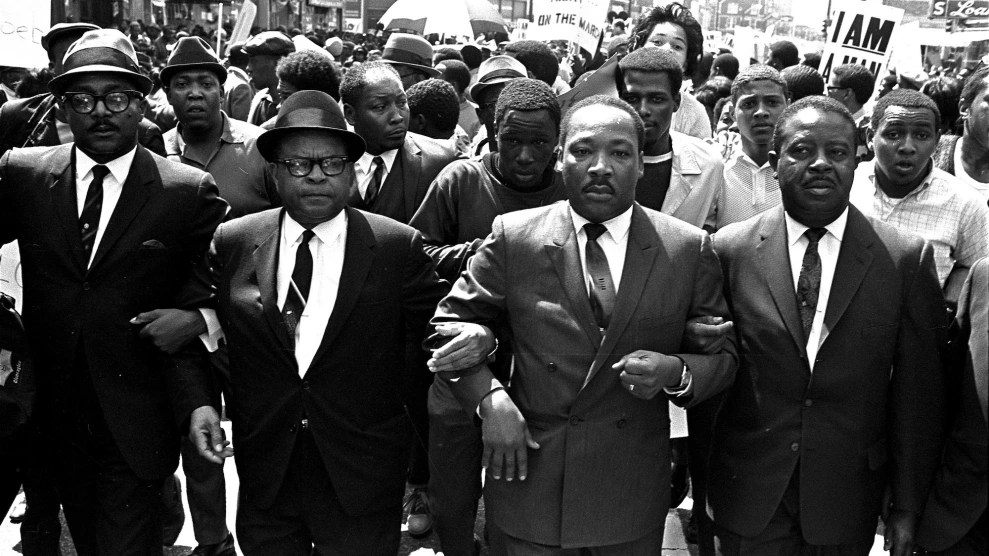
Dr. King saw the Memphis Sanitation Strike as an opportunity to highlight the connection between civil rights and workers’ rights, understanding that achieving true equality required economic justice. Alongside local civil rights leaders, labor activists, and members of the faith community, he tirelessly advocated for the workers’ cause. Together, they organized peaceful protests, rallies, and marches, igniting a spark of hope and resilience in the hearts of the workers and the wider community.
The Memphis Sanitation Strike soon became a symbol of the fight for human dignity and equality. The iconic slogan “I AM A MAN” became the rallying cry of the workers, powerfully encapsulating their demand to be recognized as equals and treated with respect. Through their unwavering determination, the workers challenged the entrenched systems of discrimination and voiced their collective yearning for change.
As the strike gained momentum, tensions escalated. Some city officials and business leaders resisted the demands of the workers, fearing the disruption of the status quo. The clash between protesters and law enforcement grew more intense, with arrests, violence, and a palpable atmosphere of unease gripping the city.
Then, on April 4, 1968, tragedy struck. Dr. Martin Luther King Jr., a beacon of hope and advocate for justice, was assassinated on the balcony of the Lorraine Motel in Memphis. The shockwaves of his death reverberated across the nation and beyond, leaving a profound void in the fight for civil rights. Yet, amidst the grief and despair, the workers of the Memphis Sanitation Strike persisted in their struggle, carrying the torch of Dr. King’s legacy.
Their determination remained unshaken. They continued to march, to protest, and to demand change. Their resilience was fueled by the memory of Dr. King and his unwavering commitment to justice and equality. Their spirits were uplifted by the support they received from individuals and organizations across the country who recognized the righteousness of their cause.
Finally, on April 16, 1968, after months of intense negotiations, the city of Memphis and the union reached a historic agreement. The workers emerged victorious, securing improved wages, safer working conditions, and the recognition of their union. The fruits of their labor were hard-won, a testament to the power of collective action and the tireless efforts of those who believed in their cause.
The impact of the Memphis Sanitation Strike reverberated far beyond the city limits. It resonated with workers and activists nationwide, inspiring them to stand up for their rights and fight against systemic injustice. The strike became a symbol of hope, unity, and the enduring power of ordinary people to effect extraordinary change.
As we reflect on the legacy of the Memphis Sanitation Strike, let us honor the memory of Dr. Martin Luther King Jr. and the brave workers who stood tall in the face of adversity. Their struggle serves as a reminder that the fight for justice and equality is an ongoing journey—one that requires our unwavering dedication and collective action.
Remember, the lessons of the past shape our present and guide our future. Let’s engage in meaningful conversations, share these stories of courage and resilience, and unite in the pursuit of a better tomorrow. Join the movement, ignite change, and together, let’s create a world where justice and dignity prevail. #MemphisSanitationStrike #MartinLutherKingJr #WorkersRights #CivilRights #SocialJustice #Inspiration #Resilience #Justice #Equality #Inspiration #Solidarity #iwasthinkingabout
Step off the beaten path of known history, and wander into the pages of “I Was Thinking About…” Your adventure awaits. #iwasthinkingabout #curiositymeetshistory #historybuff #booklovers #andylee #HiddenHistory
 I was thinking about...