

I was thinking about…
The Haunting Enigma of the Hinterkaifeck Murders: A Century-Long Puzzle of Intrigue and Horror
By Andy Lee
Nestled amidst the picturesque landscapes of rural Bavaria, the small hamlet of Hinterkaifeck was the stage for one of Germany’s most perplexing and chilling murder mysteries. In the year 1922, a sense of tranquility was shattered as a family of six met a gruesome fate that would forever haunt the collective consciousness and baffle generations of investigators and true crime enthusiasts.
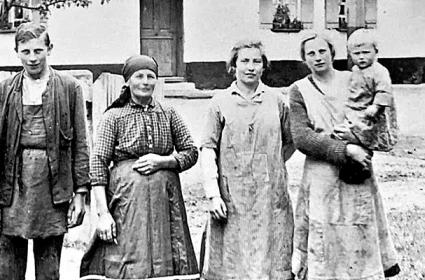
The Gruber family, led by patriarch Andreas Gruber, lived an isolated existence on their remote farmstead. Andreas, a hardworking farmer, shared the homestead with his wife Cäzilia, their widowed daughter Viktoria, and her two children, Cäzilia and Josef. The farm, surrounded by verdant fields and sheltered by dense forests, stood as a testament to their self-sufficiency and seclusion from the outside world.
But on a fateful evening in late March, darkness descended upon Hinterkaifeck, ushering in a chilling chapter that would etch itself into the annals of true crime history. Unbeknownst to the Gruber family, an unseen malevolence lurked in the shadows, preying upon their unsuspecting lives.
The night of March 31st marked the beginning of the end for the Grubers. Emerging from the cover of darkness, an unknown assailant or assailants crept onto the farmstead, their intentions concealed within the depths of their twisted minds. With calculated precision, they descended upon the unsuspecting family, their violence unleashed without mercy.
In the secluded barn, where the Grubers sought shelter for their livestock, the unspeakable unfolded. Blow after blow rained down upon the victims, their lives extinguished in a storm of brutality. The echoes of their cries for help were met only with a sinister silence, as the darkness swallowed the farm’s secrets.
Days turned into weeks, and the absence of the Grubers began to raise alarm within the community. Concerned neighbors ventured onto the farmstead, their footsteps muffled by the weight of dread that hung in the air. What they discovered within those walls would forever etch the Hinterkaifeck Murders into the annals of infamy.
The crime scene revealed a scene of unparalleled horror. The bodies of Andreas, Cäzilia, Viktoria, Cäzilia, and Josef lay lifeless, their eyes forever closed to the world. The silence of death was punctuated only by the palpable sense of terror that permeated the air. A veil of confusion settled over Hinterkaifeck, as investigators grappled with the enormity of the task before them.
As news of the murders spread, so too did the public’s fascination with the case. Rumors swirled, fueled by the community’s thirst for answers. Theories emerged, ranging from whispers of a disgruntled farmhand seeking revenge to dark family secrets hidden beneath the seemingly idyllic surface of Hinterkaifeck.
Authorities, hampered by the limitations of forensic technology at the time, embarked on a painstaking investigation. They interviewed witnesses, scoured the crime scene for any shred of evidence, and meticulously pieced together the events leading up to that fateful night. Yet, despite their efforts, the truth remained elusive, slipping through their fingers like grains of sand.
Over the years, the Hinterkaifeck Murders continued to captivate the public’s imagination. Armchair detectives and amateur sleuths delved into the depths of the case, scrutinizing every detail, and offering their own interpretations of the events that unfolded. Yet, the identity of the perpetrator or perpetrators, and the motive behind the Hinterkaifeck Murders, remained shrouded in darkness. Speculation ran rampant, with numerous theories emerging from the shadows of conjecture.
One prevailing theory suggests that the Grubers fell victim to a targeted act of revenge. It is believed that the murderer may have had a personal vendetta against the family, seeking to inflict pain and suffering upon them. Others hypothesize that the motive was rooted in a deep-seated grudge or simmering animosity between neighbors or acquaintances, making the crime a sinister act of settling scores.
Another possibility is that the Hinterkaifeck Murders were the work of a disturbed individual, driven by an insidious urge to inflict harm. Psychopathy and sadism are factors that cannot be ignored when considering the sheer brutality and level of violence exhibited in the crime. Such a motive suggests that the killer may have derived pleasure from the suffering they inflicted, making it even more chilling.
As the decades passed, the Hinterkaifeck Murders became a haunting symbol of unsolved mysteries. The case still captures the imaginations of those who delve into the world of true crime, fueling endless debates and discussions. New theories emerge, shedding light on previously overlooked clues and offering fresh perspectives on the chilling events that transpired.
Advancements in forensic science have opened new possibilities for solving cold cases, but the passage of time has its own way of eroding evidence and obscuring the truth. With each passing year, the chances of resolving the Hinterkaifeck Murders dwindle, leaving us with an enduring sense of frustration and curiosity.
Keep your curiosity alive and continue to explore the hidden gems that await your discovery. Remember, history is not just a collection of facts. It’s a tapestry of human stories, triumphs, and challenges that connect us to our past and shape our future. So, keep thinking, keep questioning, and keep discovering. Together, let’s unravel the mysteries of our world, one story at a time.
“I was thinking about…” – where curiosity meets history.
 I was thinking about...