
I was thinking about…
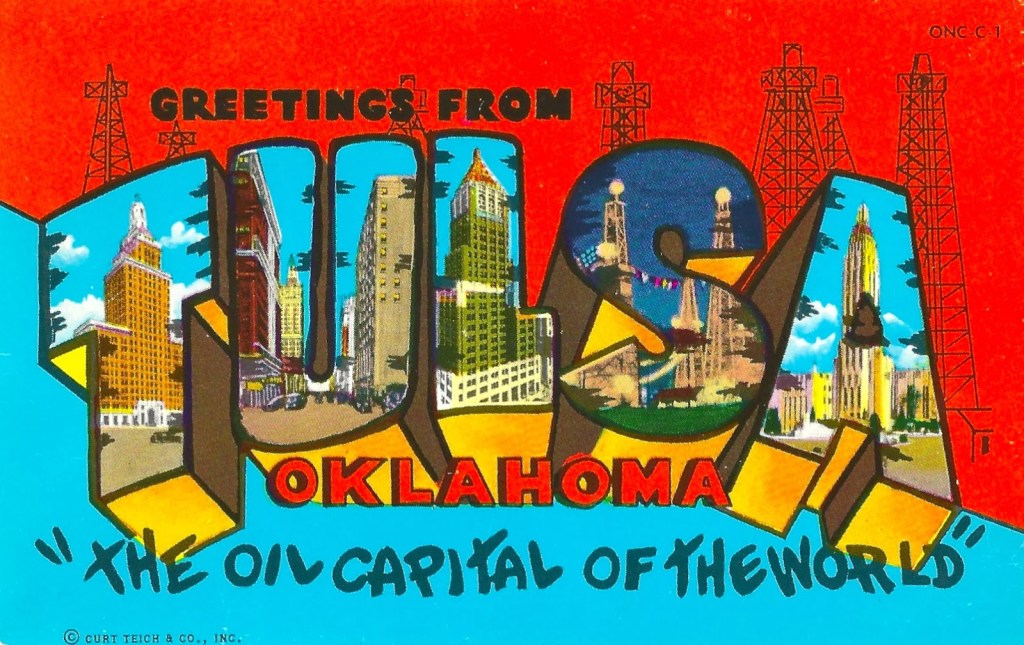
Tulsa, Oklahoma: The Former Oil Capital of the World
By Andy Lee
Welcome back to “I was thinking about…,” where we embark on a captivating journey through history. In this edition, we delve into the remarkable story of Tulsa, Oklahoma, a city that once held the esteemed title of the “Oil Capital of the World.” Join us as we explore Tulsa’s rise to prominence during the early 20th century and the enduring legacy it left on the oil industry and the city itself.
It all began in the early 1900s when a seismic event changed the course of Tulsa’s history forever. Oil, the coveted natural resource that would come to be known as “black gold,” was discovered in the Tulsa area. The news spread like wildfire, and with it came an influx of dreamers, pioneers, and fortune seekers from all corners of the country. The promise of wealth and opportunity attracted individuals willing to take risks and stake their claim in this new frontier of the oil industry.
Oil companies and refineries swiftly descended upon Tulsa, establishing their operations, and turning the city into a bustling center of oil production. The once modest town transformed into a thriving metropolis, its landscape forever altered by towering derricks, massive storage tanks, and the constant hum of drilling machinery.
The impact of the oil boom on Tulsa’s population was staggering. As news of the city’s newfound prosperity spread, thousands flocked to Tulsa in search of employment and a chance to share in the spoils of the oil industry. The city swelled with people from all walks of life, creating a melting pot of cultures, ideas, and ambitions.
With the influx of people came the urgent need for infrastructure to support the rapidly growing city. Roads were paved, bridges were built, and neighborhoods sprouted like mushrooms after a rainstorm. The Tulsa skyline began to take shape as magnificent buildings, adorned with intricate architectural details, rose to punctuate the city’s newfound prominence.
Amidst this feverish growth, Tulsa’s oil industry reached a pivotal milestone in 1905 with the discovery of the Glenn Pool oil field. Nestled just south of the city, the Glenn Pool field unleashed an unprecedented torrent of black gold. Gushers spewed oil into the air, and the rush to tap into this vast reservoir of wealth began.
News of the Glenn Pool discovery reverberated throughout the oil industry, attracting the attention of major players, and transforming Tulsa into a global oil powerhouse. Companies such as Standard Oil, Gulf Oil, and Phillips Petroleum established headquarters or major operations in the city, solidifying Tulsa’s reputation as a center of industry and innovation.
The oil boom brought not only economic prosperity but also advancements in technology and scientific understanding. Tulsa became a hotbed of research and development, with engineers, geologists, and scientists pushing the boundaries of what was known about oil exploration, extraction, and refining. Pioneering techniques and cutting-edge technologies emerged from Tulsa, setting new standards for the global oil industry.
However, Tulsa’s dependence on oil made it vulnerable to the inevitable ebbs and flows of the market. The city experienced its share of economic downturns, most notably in the 1980s when a sharp decline in oil prices triggered a severe recession. Many businesses closed, jobs were lost, and the city faced the sobering reality of its reliance on a single industry.
Nevertheless, Tulsa’s resilience and ability to adapt allowed it to weather the storms and emerge stronger. The city diversified its economy, attracting new industries such as aviation, healthcare, and technology. These sectors, along with continued investments in energy, have helped Tulsa remain a vibrant and dynamic city with a diverse economic landscape.
Today, as you explore the streets of Tulsa, you’ll encounter the remnants of its oil heritage. Magnificent art deco buildings, constructed during the heyday of the oil boom, still stand as a testament to Tulsa’s rich history. The distinctive architectural style, with its intricate details and geometric patterns, reflects the optimism and grandeur of a bygone era. Take a stroll through the Deco District, and you’ll find yourself transported back in time, surrounded by the echoes of Tulsa’s oil-driven past.
Tulsa’s oil legacy extends beyond its architecture. The city’s cultural fabric is interwoven with the stories of the people who worked in the oil fields and the communities that thrived around the industry. From roughnecks to wildcatters, their perseverance, hard work, and entrepreneurial spirit shaped Tulsa’s identity.
In recognition of its oil heritage, Tulsa pays homage to its history through various museums and exhibits. The Tulsa Historical Society and Museum houses artifacts, photographs, and documents that chronicle the city’s oil boom and its impact on the region. Visitors can explore interactive displays, delve into personal accounts of those who lived through the era, and gain a deeper understanding of the transformative power of the oil industry.
Tulsa’s oil heritage is not merely a nostalgic reminiscence. It serves as a reminder of the city’s resilience and adaptability. Today, Tulsa stands as a vibrant and diverse community, propelled forward by a spirit of innovation and a willingness to embrace new opportunities.
Keep your curiosity alive and continue to explore the hidden gems that await your discovery. Remember, history is not just a collection of facts. It’s a tapestry of human stories, triumphs, and challenges that connect us to our past and shape our future. So, keep thinking, keep questioning, and keep discovering. Together, let’s unravel the mysteries of our world, one story at a time.
“I was thinking about…” – where curiosity meets history.
 I was thinking about...